Friday, September 29, 2006

Books I Read While I Was Writing, Part 2. "The Middle Passage," by Charles Johnson


I have sometimes wondered if descendants of slave owners write better books than descendants of slaves because the guilt in these men and women forces them to be three dimensional. Of course this is not always true, all the existential guilt of Conrad still resulted in racism in Heart of Darkness and the grievous issues brimming against her tongue did not stop Toni Morrison from writing Song of Solomon, a novel that showed that victims can be villains too.

In this realm is the truly daring Middle Passage, a novel whose time period defuses what it actually is. The novel not only dares to marry the classic ship voyage with the horrors of slavery but throws moral indignation aside and forces us to make our own conclusions. The fact that these men are in fact dealing with human cargo does not detract from us being riveted by their lives or liking and hating them as the story rolls on.

But Johnson, not content to let character or reader off the hook with a sea yarn, works the fact of slavery into the novel anyway and exposes motives and hearts that may stun the reader. It’s not every white reader who is ready to deal with a richly complex and sometimes principled Commander who also happens to sodomise the cabin boy, nor is every black reader ready to confront the fact of black complicity in the slave trade and Africa’s own perplexity that such a thing would be abolished. That he gets away with it is testimony to the rollicking, flawless prose that transports and changes the reader as well.

In novel, Rutherford Calhoun, a freed black man living by his wits in New Orleans, stows away on his ship to escape loan sharks and a forced marriage. Little does he know that this ship, the Republic (haha) is a slaver bound for Africa to trade illegally in human cargo (The Slave Trade was outlawed in 1807). Led by a mysterious and dangerous Commander and a crew of degenerates, the Republic takes on the last remnants of a mystical African tribe and a mysterious cargo to transport across the Atlantic, the ‘Middle Passage’ of the title. But more that a voyage of ship and cargo, the novel is a voyage of discovery, self discovery for Calhoun but also a discovery of all that is worthy or abominable about human nature. It’s also funny as hell.

Now that I am writing fiction set in the past, I’ve had to reach the point of putting down the encyclopedia to write as if I was there. Reading books of the time like Pride and Prejudice is useful, but contemporary fiction about that time may be even more so because it allows for a contemporary perspective, one that Jean Rhys had but Charlotte Bronte would not. I think, this contemporary perspective, this simultaneously deeply inward and expansively outward viewpoint, separates a novel set in the past from historical fiction. This is why Ivanhoe is historical fiction, but Wide Sargasso Sea is not. The past is the setting, but not the point. I have no interest in writing historical fiction either and I surrounded myself with books that made this difference.

The Middle Passage, and the similar Rite of Passage by William Golding transported me to that world and gave me the footing to write from it. There aren’t many novels about West Indian slavery, certainly not many great ones, but there are lots about the speech, bearing and conduct of the people of the time, something both books capture perfectly. Both books, and even Moby Dick before them, throw different peoples and ethnicities together and the result is a wonderful display of the possibilities of language.

Not being from that era, it’s easy to become entrapped by language, to be so lost in structure and grammar that one’s prose never moves. Charles Johnson never falls into this trap and neither does William Golding or Toni Morrison for that matter. In that way, their novels are (for me) as much research texts and they are works of fiction. I read them to unlock clues of speech, to learn the languages instead of copying them. I have a feeling that these writers did the same thing. I’m not striving for complete accuracy with my dialogue but I do want the sense of time and place to be reflected in it.

The Middle Passage gives me a sense of time and place without ever falling into the “historical fiction” tag. It reminds me that language was more musical and less short winded then and people were very big on saying one thing and meaning another. Also it reminds me not to fall into the slave traps that befall the black writer, some of which I had already fallen into before I read the novel.

Before Middle Passage, all my white characters were evil and all the black good. Before Middle Passage, all my white characters were believers in or complicit to slavery and all my black characters were not. Before Middle passage I had used the colour line to draw wickedness and brutality from humanity and suffering. Johnson, with a wink and a slap reminds me that it ain’t as black and white as that.

Tuesday, September 26, 2006

How To Make Your Own Prince Masterpiece.


By now you should know how to tell your Prince masterpieces apart. Dirty Mind is the new wave masterwork, complete with rubbery synths and compressed drums. 1999 is the funk workout with nine-minute jams that should have been nine minutes longer. Purple Rain is the rock and roll monster, with songs like Computer Blue burning so hot nobody noticed that Prince forgot the second verse. Parade is the Avant-Garde opus, the one for the True Prince Fan and probably the most original music of his career. And of course Sign O’ The Times where it all magically comes together. But for a such a pop genius, where is the pop masterpiece?

I think that is Around the World in a Day, but don’t be surprised if you don’t know it or don’t agree. I didn’t agree either for years; ten years in fact until the CD burning-Ipod era came upon me. The Ipod is doing many drastic things to music, and whether good or bad is a question for another era, but there is no question that it has changed the way we look at music. Now we can ditch the songs we hate and break the rules of the album experience, something that has been both good and bad in that we now have a whole new generation who cannot appreciate an album as a work of art.

But the Ipod has allowed us to not only ditch songs but recontextualise them so that an album is now no longer a document of the recording experience but the listening one. Now I get to decide how an album flows. So now I can insert the funky version of Honky Tonk Women in Rolling Stones' Let It Bleed instead of the lame country original and suddenly a great album becomes rapturous. Suddenly I can alter one of rock longest running Achilles heels: the poorly sequenced record.

You know them don’t you. Albums that are lesser than the sum of their parts, records that are great, song for song but fail because of how the songs are strung together. Albums like Jane’s Addiction’s Ritual de lo habitual, Billy Joel’s The Bridge and Prince’s Around the World in a Day. No offence, but sometimes an artist, even Prince, is a poor judge of his own work. The hits were obvious but there were also buried between long stretches of art wank. Lugubrious bad acid trips that were probably fun to make but were a slog to listen to.

So I got to work by ditching the utter crap first. Gone was The Ladder, the pointless faux gospel written with his Dad and gone was Condition of the Heart, which some classify as an epic, but is really just an overblown soul number that took way too long to start. The rest though, the rest is something else. I opened the album with:

1. Temptation.
One of prince loudest rock jams with perhaps his rawest guitar playing ever (just try to get over the squall that opens it). He was never this unhinged again and when the drums and horns (?) come in you know he’s a goner. Prince is too busy screaming to actually sing, but you’ll be too busy rocking to actually care. Of course 4 minute of balls out rock give way to 4 minutes of artsy pretension but you have to take the good with the bad sometimes. The dialogue, between a stern god and a horny prince over a fine girl was silly then and is ludicrous now, but just go along with it because after nine minutes of temptation comes...

2. Raspberry Beret.
It’s easy to forget how brilliant he is at a simple pop song. After Temptation ends in a dirge the famous Raspberry Beret percussion is a welcome wake up call. And those swelling strings still sound as great as you remember.

3. Tambourine.
After three minutes of super pop, it’s time for the funk jam. That is Tambourine. Buried originally after that snore Condition of the Heart, Tambourine sounds even better put beside a great song. Better than Housequake? Maybe.

4. Paisley Park.
After Tambourine I’ve put a psychedelic triptych that now forms the emotional core of the album. The three songs crystalize the themes of the entire album: escape, utopia and the struggle to move beyond just sex. Paisley Park is actually one of Prince most underrated songs, cushioned as it is by a sprawl of spiraling guitars. Yes you read right, listen to it again.

5. 4 the Tears in Your Eyes.
Since two songs are gone I had to put two new songs in but couldn’t go too far or that would be cheating. Instead I stuck to songs from the same sessions. 4 The Tears in Your Eyes was originally put on the We are the World album, but it make more sense here as it may be his most successful psychedelic work. Even more utopian than Paisley Park it still boasts a killer beat and harmonies from Wendy and Lisa.

6. Around the World in a Day.
The title track. Every bit as stunning as when you probably first heard it, the Moroccan strings and Arabian nights percussion still sound like transmissions from a lost David Lean movie.

7. America.
Fine, the Reagan-democrat lyrics were lame then and lamer now, but this one of those unabashed party starters like Purple Rain’s Baby I’m a Star. The band, probably knowing that their leader was knee deep in bullshit played like they were committing mass murder.

8. Pop Life.
My favorite song on the album. A rare moment of lyrical focus on such a trippy record, Pop Life is where the pixie dust effects wore off and perhaps the first sign that Prince was getting tired of it all. “What the matter with your life? Is the poverty bringing you down? What's that you putting in your nose? Is that where all your money goes?" He sang, prefiguring the social consciousness that would explode on Sign O’ the Times and Lovesexy. But if the lyrics are maudlin the music was miraculous.... until the bridge. Near the end of one of Prince’s lightest melodies comes his darkest moment. The song collapses on itself and you hear lots of disorienting crashes and bumps followed by loud cheers. Taped way back in 1981 during his disastrous opening slot for the Rolling Stones, the sample is actually the crowd booing and stoning him off the stage. You can hear a man shout “throw the bum out,” and the crowd cheering as Prince, beaten, leaves the stage.

9. She’s Always in my Hair.
Such a cold moment needs warm relief. Originally the B-side for Raspberry Beret, She’s Always in My Hair, is one of Prince's live showstoppers, right up there with How Come you Don’t Call me Anymore. This song is all excess. It’s too loud, too long, too drippy, too yellow brick road, in short the perfect album closer for a Prince record.

So there you have it. There were other considerations of course. I had to force myself to stay away from other 1984 tracks that were more associated with Purple Rain, like Erotic City. I also had to choose between the original title track and the super-rare funk version that only few people on this planet have ever heard. I have it on cassette and the quality stinks. So there you go: Around the World in a Day Redux. Is it better then Lovesexy? Maybe not but it’s better than every single record that followed that one.

Monday, September 25, 2006

Why Jamaicans Can’t Rock

Our rock and roll is bigger than your rock and roll. I know this because in the mid 90’s Jamaica’s Rock scene made the cover of billboard (the music industry Bible, if you don’t know) all without an album or single to its credit. That was the mid 90’s after all, and just about anything could be covered in flannel and labeled alternative, even if it sprung from the Caribbean sea and floated by on a trustafarian carpet of entitlement and a cloud of spliff. It would be too easy to say that such an article seems silly nowadays, but what journalist Elena Oumano didn’t get was that the article was ludicrous even back then. There in no such thing as a Jamaican rock scene and no amount of Cure covers, late night concerts on Tuesday nights or dilettantes in Urban Outfitters T-shirts can make one. As an unabashedly bigoted rockist, it pains me to say that my countrymen and women can’t rock but the truth is we can’t. Here’s why.

1. Too self conscious
Jamaicans who try to rock can’t seem to get over the idea that they are Jamaicans trying to rock. Like men who raise their children or dogs who walk on hind legs, it not that they do it well but that they do it at all that makes the jamrockers ecstatic. Jamaican rockers can get rapturous when talking about their mission and several can give you the whole they think I’m a freak for rocking story. But rock and roll is sex and drugs, rebellion and excess, sound and power, none of which these guys possess. They are neat to a fault, despise distortion, too proud of their lyrics to actually write any and are too caught up in being a rock star that they never actually rock. In the sixties rock and roll split into two camps, those who refigured rock as a bohemian underground (the Velvet Underground) and those who translated it as adolescent rebellion (everybody else). But both rocked for and against something. Jamaican rock stands for nothing and as a result it falls for anything, chief of which is reason number two.


2. Too many dilettantes.
It’s not their fault. Rock has always been even, at its showiest, based on the sexy myth of the underdog climbing to the top. Gram Parsons aside, I’m not sure a person of privilege has ever managed to fake like a real rock star so I’m pretty sure a Jamaican can never hope to. Jamaica rock is the rock of boys and girls who could afford their instruments and all the worse for it. There is no hunger, which you should know is the single essential element for great rock and roll. For some warped reason several Jamrockers think precision is what matters; how better a player you can be, as if punk rock never happened. When heard of my worship of Wolfmother, a rocker friend of mine was disgusted. All they know is Blues in C! He yelled. This is of course true. This is also of course irrelevant for the wolfies have more rock and roll in their stolen riffs then anything a Jamaica can make up. The comment also shows a fatal misunderstanding of the one of the very basic rock and roll fundamentals, something even Madonna understood: You’re supposed to steal, beeyatch.

3. Too self congratulatory.
Jamaica rock is the Scene That Celebrates Itself. Make no mistake— the Jamrocker’s biggest fan is the other Jamrocker in the front row. This creates a weird kind incest where the music is what emerges retarded. Because these guys are in such awe of each other, play together and are not overtly critical, nobody sees that the emperor is naked. It’s a strangely closed off scene, defined by its limitations where one feels that if they ever got over the self perceived Jamaican anti-rock bias and had to actually rock a real crowd they’d shrivel. So they play mostly to each other. Some call this a scene. I’d call it a cult but that would imply a certain devoutness. One reason Jamaicans can’t rock is that nobody believes that they were made to do this and can do nothing else. Can you imagine Mick Jagger trying out medicine because the rock thing didn’t work out? Didn’t think so.

4. Too Jamaican
No self-respecting British rocker would try to make “British rock” for he would find the idea ludicrous (This is why nobody listened to Menswear, guys). Rock and roll has no national address. Nobody told this to the Jamrockers who keep feeling pressured to stamp their own identity on their music. Nothing wrong with that on paper except that they usually do this the only way they know how: Reggaefying rock or rockifying reggae. Black rockers in the USA also shot themselves in the foot when they all felt they had to be funky. So a band does a hard rock version of the Jamaican national anthem, but what is the point? Nothing is wrong with stealing an idea from Jimi Hendrix, but there is no thrill in the theft, not outrage in the violation, no understanding that Hendrix was building the anthem up but also ripping the thing to bits, forcing beauty to copulate with ugliness to make something both pretty and monstrous. Years ago the band Rockabessa remade the Stones’ horny boy anthem, Satisfaction as a light, lilting reggae number straight out of the Jimmy Buffet songbook. Sure it sounded Jamaican but it was one the silliest and stupidest misunderstandings of a rock song since Born in the USA.

This smacks of people trying too hard to connect to an identity, one’s roots so to speak. Silly rabbits you have no roots. We keep making the mistake of thinking that authenticity comes from where we’re from and not where we’re at. And when that address is a place of privilege it forces the worst aspects of trustafarianism; a faux authenticity that screams for consciousness, or ghetto glory or twelve tribes Rasta fervour or dancehall bridges in the middle of hard rock songs, stuff that shouts hey, I’m Jamaican too! The fact is the reggae-rock masterpiece has already been made. It’s called Exodus, kids, look it up.

5. Too much crap music.
If there is one thing that links everybody from Mick Jagger to Prince to Jack White to Tapes and Tapes it is an absolutely unimpeachable taste in music. Prince is a perfect example. When he used to wax rhapsodic about Led Zeppelin and Joni Mitchell we ended up with Dirty Mind and Sign O’ the Times. When he stopped listening to everybody but those bimbos he was trying to sleep with we ended up with The Batman soundtrack. It’s astounding how bad the taste of some of these rockers can be. Instead of Nirvana they gush over Bush copying Nirvana. Stone Temple pilots was an epiphany for many and I even hear a rumor about a rocker friend of mind taking his whole band to see Hoobastank, but I refuse to believe that one. I once asked a folkie, which was her favorite Joni Mitchell record, and she responded with who? Maybe they believe as many ludicrously untalented writers do that by listening to others they would be “influenced” by them. Of course. These guys are such perfectly formed geniuses already that who am I to disagree.

6. Too little to show for it

The proof of any music scene, movement whatever must boil down to actual records. Many of the guys mentioned in the Billboard article are still in the scene, still playing music, still forgetting Jimi Hendrix’s walking bass in Hey Joe and still trying to lace nu-metal with Jamaican Patois. But where are the records? Where are the documents of their era? Most will give you an excuse like a Funkadelic line. They are standing on the verge of getting it on. So why don’t they? My belief is that they can’t and probably already know it. Maybe, just maybe, they are not rock and rollers at all, but fans whose love of the music coincided with the ability to buy instruments. This is by no means a bad thing, but stop charging people 300 dollars to have people watch what your money bought.

Monday, September 11, 2006

Can you hear them, the helicopters, I'm in New York...

So it's been five years since Osama Bin laden blew a big hole in the middle of everything that we took for granted as safe and sure. This year, like last time I'm in New York for 9/11. I don't know if what I write next will make any sense. I have a student visa and a visitor's visa, I don't live in the United States even though I'm here all the time and I'm certainly not American.

I am however, a New Yorker. I spend pretty much half of each year here, but more that that, I've seen and heard my transformation to a New York State of mind, something that is equal parts worldliness, defensiveness, open-mindedness and impatience. I'll defend a freak's right to be freaky on the subway, but lose all sense of tolerance when I come across slow walking tourists on 34th and 7th. I know one person who died in Trade Center but also the last person to leave the building alive. 9/11 still seems like a surreal event, not like a film necessarily but like an unwelcome dream that refuses to leave my self conscious. I still can't believe what happened.

But like millions of non-Americans, my horror at 9/11 was also mixed with disturbing ambiguity. There's a part of me that could not believe what I was seeing but also a part of me that thought America had it coming. I was shocked, but not surprised. I've seen the very best of America at home and the very worst abroad. I found myself holding back tears even as I was getting all Malcolm X-like, muttering that the chickens have come home to roost. Sorrow and schadenfreud is not a pretty mix, but once were talking about the USA they are as inseparable as Sodom and Gomorrah. The New Yorker in me was grieving even as the foreigner in me was using everything from CIA policy's in North Africa to apocalyptic theory to explain to myself just how inevitable it all was.

I'm not actually in New York. I'm at a hotel in Pennsylvania listening to the radio on how 9/11 transformed the rest of America. The first thing I notice is that there's only one place that has moved from that day and that's New York itself. Like London, the act of moving on is just prefigured in our DNA. The only way forward is through and New Yorkers get through almost everything through sheer force of momentum. New Yorkers do not do inertia—that's for the rest of America to grapple with.

So I'm moving and grappling. It's hard to separate America's foreign policy from America itself. Bill, my best friend in the USA has also been the brunt of my most furious debates, about the ridiculousness of Americans asking non-Americans not to kill them while the American military decimates their country. I asked him if he really thought that an Iraqi woman who just lost her family should take a quiet moment, ponder a little and then come the conclusion that it was the American Government that did this, not the American People?

Yes he said.

I see his point. If the reason for living in this world is to become better citizens of it then we should all appeal to that world's better nature. But not so fast. His brother was not killed in Iraq. His family's home wasn't just destroyed to clear the way for a Haliburton Truck. And try as he can to show me how he has no power to change his government, that flies in the face of the whole freedom to choose that even the most average American boasts about.

Like many Americans, Bill was asking a question that I'm not sure he has the right to ask. He was asking non-Americans not to kill his family even as his own government was trying to kill theirs. He was saying that he tried to change his government and failed and that he shouldn't have to pay for it; that killing innocent people wherever they are is just wrong and no ideology can make it right. I understand that. But I also understand why such a statement is met with little sympathy outside of America. America convinced us that if we didn't like our governments, we simply have to change them and that was that. Now Americans are telling us otherwise. More than that, Americans are asking us an impossible favour, that we show them our best even as they or rather their government insists on showing us their worst.

That's a gift I'm not sure the world can deliver. The New Yorker in me wants to protect this city and make sure 9/11 never happens again. The foreigner in me who knows names like Larry Devlin and Henry Kissingerr and terms like destabilisation is still shaking a fist. The foreigner in me who watches as American creations like Osama Bin Laden, Sadam Hussein and Manual Noriega become monsters laughs at the blowback and concludes that the country had it coming. Bill is asking for me to look at him as simply another human being, not realising what a tall order that is. We look at American as angels or demons, or celluloid forms, not real people trying to make it through a day like everybody else. Americans are just people trying to make sense of a senseless event and trying to find some perspective in which everything might fit.

The trouble with that is that while every right thinking person in the world became an American on 9/11, most of us renounced that citizenshipp when Bush invaded Iraq. Americans stopped being a nation of people again and returned to the globally imperialist machinery that we have always known it to be. We find it hard to separate Americans from their government largely because America spent so much time convincing us that their government was chosen by the people. That makes us think that every American is to an extent responsible and there is really no such thing as an innocent victim.

But that perhaps is my own cop-out. As a Jamaican I know full well the feeling of being powerless in the presence of my own government. I just would not have expected such a feeling from an American. But when I say to the Bills of this world that I don't understand his frustration I'm hiding behind ideology, or put another way, I'm lying. I'm just not ready to accept the American citizen as being as scared, angry and confused as I am. I'm not ready to accept the American as victim or even human. I remember the first time I came to the U.S. and was stunned that all the women did not looking like Farrah Faucet all the men didn't like Patrick Duffy. I was stunned that America was a land of people and not types and that it was people who died in 9/11. That in war there are only victims and some of those victims are the ones who fired the first shot. That eye for an eye leaves the world in blindness and shot for shot leaves it empty. I'm not trying to give American a hug (well maybe new York), but I am looking for a conversation.

Saturday, September 02, 2006

So Many Books, Not Enough Time...

Jennifer Egan, Claire Messud, Thomas Pynchon, Richard Ford, Richard Powers, Charles Frazier, Joe Meno, Edward P. Jones, George Pellecanos, Alan Moore, Barry Unsworth, Mark Haddon. I'm so glad I have no book coming out this year. I'd never have a chance.

Thursday, August 31, 2006

Books I read while I was writing Part 1.

“Mastery, Tyranny and Desire: Thomas Thistlewood and his slaves in the Anglo-Jamaican World,” by Trevor Burnard

Even with a shared legacy of slavery and a realization that it remains the crucial shaper of not just the African Diaspora but the political, economic and social foundation of the Caribbean, “Mastery Tyranny and Desire” still comes across as a revelatory, appalling shock. I was tempted to think that the black person’s awareness of slavery was much like the Jew’s knowledge of the holocaust. That even if one had not experienced it directly, the event was such a traumatic shaper of subsequent Jewish life that one absorbed all its facets as common knowledge. But in both cases I was wrong. There are still facets to the holocaust, still being uncovered and there are still aspects of slavery (the black holocaust) still being discovered anew.

In that sense, this book, an analysis of slave and property owner, Thomas Thistlewood’s diaries becomes essential. From 1750 when he sailed to Jamaica, to 1786 when he died at sixty-five, Thomas Thistlewood, middle class before his time, wrote in his diary every day. Most of it was preserved and are kept in museums worldwide, but put together they stand as a valuable, shocking and essential document, in many ways the most essential of all the slavery accounts from whites. Oddly enough it is the limitations that give the diaries their power.

Thistlewood was by nobody’s standards a remarkable man. He was a man of means who made wealth for himself in the new world by being an overseer; a man who eventually bought his own property that included a humble two storey house and several slaves. He was no great wit like Jefferson, nor did he sprinkle his words with moral contempt like historian Edward Long, nor was he gifted with self-analysis like many of his peers. But he did keep a diary for most of his life, which was in itself remarkable for a man.

Trevor Burnard, even when he is analyzing Thistlewood’s words and reminding the reader of the context, is wise enough to know when to get out of the way and let Thistlewood speak for himself. Thistlewood’s words are both artless and heartless. He would list his several sexual dalliances as if they were shopping lists; most times in abbreviations mixed with schoolboy Latin as if he feared discovery. Given that a large portion of his sexual conquests were married white women that was understandable. A typical episode would be written like this:

“Cum E.T.—cum illa in nocte quinque tempora. Sed non bene”
Translated: “Had sex with Lady Elizabeth Toyne (wife of his employer) last night. Not very good.”

The diaries are also bracing in their depiction of violence. Whatever perspective one uses while reading this book, whether the reader transports himself to the time or judges the time with a distance, the details are still horrendous precisely because they are so matter-of-fact. Perhaps what is most striking about that time, is how behaviour that would today be defined as sociopathic was given free reign:

“His sexual appetite appears less that of a Caribbean Casanova than the unnatural and bestial longings of a quintessential sexual predator and rapist. His willingness to subject his slaves to horrific punishments, which include savage whippings of up to 350 lashes and sadistic tortures of his own invention such as Derby’s dose, in which a slave defecated in the mouth of another slave’s mouth and was then wired shut, reveal Thistlewood as a brutal sociopath.”P31

One could explain Thistlewood’s actions as mere symptoms of his time and one would be right, but not as Burnard deftly explains, in the way one might think. The fact is, Jamaica, unlike the United states and the Latin American colonies was never properly settled. There were no magnificent buildings or strong social structures to force the rule of either law or “civilized” behaviour. That left many men to make their own laws without worrying about any moral authority beyond their own conscience. It also allowed for men to explore the darker sides of their sexual nature unencumbered by any fear of retribution. It asks the reader a pointed question. If you could get away with it as they could, would you do it? There’s a theory that Jack the Ripper escaped to the Caribbean, and if he did, he could not have picked a better place.

The Thistlewood diaries provide much rich information for the historical writer but even more for the writer interested in deciphering the European mind and its inherent contradictions and hypocrisies. I took both from this book, the shopping list of atrocities as well as the oxymoron of enlightened Europeans subjecting other people to slavery. The book forces readers to not only witness the thinking of the slave owner but to empathise with it. Here the diaries succeed in a way the very best fiction hopes to.

But the book also exposes the limitations of fiction and the line that every writer must draw for himself when dealing with facts. What does one do when fact is more shocking than fiction? What does one do when the absolute brutality of truth would stretch the boundaries of plausibility in fiction? It is hard for people today, in particular white people to believe that any civilized race could have been capable of such stunning brutality. It’s part of the collective denial that allowed for concentration camps half a century ago and ethnic cleansing today.

But it poses the great challenge; how much is too much? How does one deal with the hand grenade of slavery, a polarizing topic, even today? The first few pages of my novel raised consternation from some initial readers who simply refused to believe that an entire nation of people could be so complicit in atrocity with not one person realizing that this was wrong. How do I as a writer make that plausible? Do I serve history wrong by including a white character appalled by slavery? That type of European would not emerge until 35 years after my novel begins.

Perhaps what I took from this book, even more than the vital and vivid historical detail is the reminder (or is it warning?) that the duty of the novelist is not the same of the historian, or polemicist or philosopher. That I am at the service of the story and not the political position, or my desire for literary revenge.

I have to take myself to the point that Spielberg reached in Schindler’s list where he had to accept that even the villain deserves complexity and humanity even as he does the shockingly inhumane. Two friends asked why I am writing this book and my response then was that, it was my duty to not let “those motherf*****s ever forget what they did to us.” There is still a part of me that believes that, but I had to make it subordinate to my duty as a novelist. I have to remember every time I sit down to write that the blackest of evils is still pretty gray and that a simplistic depiction of cruelty serves nobody, not even the victims of it. This is a hard lesson for a novelist still furious at history and I would be a liar if I said that I have fully accepted it.

Wednesday, August 30, 2006

White Martyrs and Black Savages


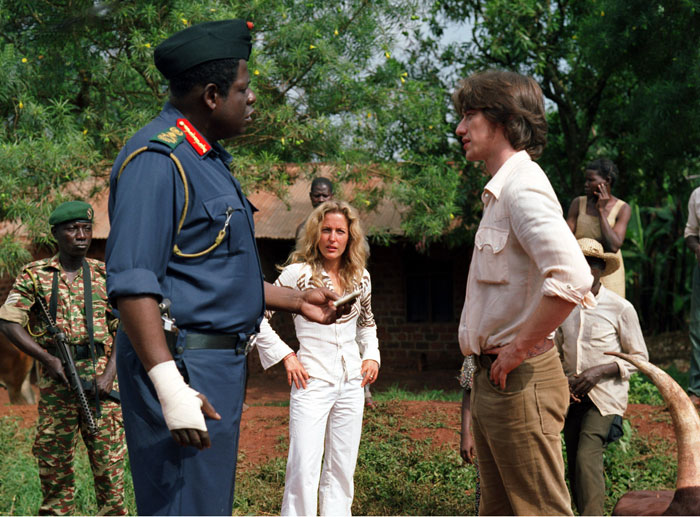
800,000 killed in 100 days. Would you risk your life to make a difference? That’s the question that informs Michael Caton Jones’ movie, Shooting Dogs. “I wanna make a difference, you know,” says a skinny british doctor in the new movie The Last King of Scotland. So here I am, negro all of 35 wondering why I’m not so stupidly happy, delirious even that all these white boys are in blackest Africa trying to save the blackies because they so want to make a difference. Not in Africa, mind you, but their own lives. Shooting Dogs is yet another movie about Rwanda and The Last King of Scotland is ostensibly about Idi Amin, but these movies are really not what they seem to be. The former is not about Rwanda at all, nor is the latter about Idi Amin; they’re the stories of a white man trapped in black (and sometimes yellow) hell where in the midst of all this inhumanity he discovers what it means to be human. He tries to make a difference.

Am I the only one sick of this bullshit? I see the trailer for The Last King of Scotland and it reminds me of Shooting Dogs, which reminds me of The Serpent and The Rainbow, which reminds me of Tears of the Sun, which reminds me of Zulu! Which reminds me of Shaka Zulu, which reminds me of King Solomon’s Mines, which reminds me of Tarzan, which reminds me of The African Queen, which reminds me of Patrick Swayze’s horrendous City of Joy, which reminds me of Dances With Wolves which reminds me of Apocalypse now which reminds me of Heart of Darkness, the novel that all but invented this formula. Take a white man, add savages noble and ignoble, stir and great god ‘a moighty, lookee there at the spanking new (though bruised and battered) white man that floats to the top. The black, brown and yellow people, they stay down in the mix.

I for one am tired of it. Oh but we have black characters, they say. It’s not like we’re DW Griffith. But at least I knew where I stood with Griffith. It’s these whiny, oh-so-conflicted characters that truly piss me off. Of course these stories have black characters; do you mean the under-qualified bureaucrat? How about the long suffering but essentially skill free doctor, or perhaps the oxford educated negro who comes back to Africa to find himself just another white man trying to make a difference? What about the malevolent villian who insists that he's merely misunderstood while he abuses the native girl, the one who works her charms, never her intelligence? The mama who doesn’t talk English? The cute kid who steals from him at first but comes to look at this strange white man with the weird music as the coolest older brother ever? Who comes up with this stuff? Who watches it? Why do people like this story? Is it because of the inevitable bloodshed that follows?

And there’s always bloodshed coming. People seem to be riveted by African atrocity these days. News from Rwanda, Darfur and the Congo stir reactions that are almost id-like, revelatory more for what is not being said than what is. So under the code word of blood-lust, reporters and pundits hint at something that nobody would dare say: that maybe this genocide is a particularly black or at least coloured thing, occasionally dormant but ready at any moment to spring fire. That at the core of genocide may be a savagery that resides in black flesh.

This perplexes me. I’ve never really understood why African atrocities should stun anybody. I thought the foundation behind Rwanda’s ethnic butchery, Congo’s kleptocracy, Uganda’s casual serial murder, and Angola’s civil conflict was plainly obvious. They were imitating Europeans. Belgians to be specific. 19th and early 20th century Belgians to be particular. King Leopold II to be exact.

Cousin of Queen Victoria, King Leopold was also the man behind the Congo Free State (which was anything but), a personal project of the King to plunder rubber and ivory, through the re-institution of slavery. Even by Europe’s stiff standards for butchery, King Leopold was a piece of work, a sociopath hated in his own country let loose on a continent he never went to, and unleashing barbarity that is still imitated to this day. Over half century before Stalin followed his lead in Russia, Leopold subjugated Africans to his will and was responsible for the death of millions.

But so far, so predictable. Europeans have been exterminating non-Europeans from the days of Cortez. But Leopold brought something extra to the mix, a level of cruelty and atrocity unforeseen in the continent. He had a particular thing for hand maiming, or maybe he had no idea of the cruelty he unleashed after he was given the Congo to play with. “Given” of course being relative since nobody African can remember handing anything to Europe, other than slaves of course. Nobody knows for sure but the body count is estimated from 5 to 15 million. But more than that, he taught Africans cruelty by example, to the point that most of his innovations, including hand chopping is still practiced today. And the Belgians in the Congo that came after were almost as bad. The Rwanda massacre was a shock only if you weren’t familiar with Belgian dominated Africa. Otherwise the only question would have been how come it didn’t happen before. One does not turn an ethnic group against another for almost a century, then step out of the way to expect peace talks. I’m not excusing the killers, but when one creates monsters one should expect the monstrous.

One junior white officer described a raid to punish a village that had protested. The white officer in command: "ordered us to cut off the heads of the men and hang them on the village palisades, also their sexual members, and to hang the women and the children on the palisade in the form of a cross." After seeing a native killed for the first time, a Danish missionary wrote: "The soldier said 'don’t take this to heart so much. They kill us if we don't bring the rubber. The Commissioner has promised us if we have plenty of hands he will shorten our service.'" In Forbath's words again:

The baskets of severed hands, set down at the feet of the European post commanders, became the symbol of the Congo Free State. ... The collection of hands became an end in itself. Force Publique soldiers brought them to the stations in place of rubber; they even went out to harvest them instead of rubber... They became a sort of currency. They came to be used to make up for shortfalls in rubber quotas, to replace... the people who were demanded for the forced labour gangs; and the Force Publique soldiers were paid their bonuses on the basis of how many hands they collected.

In theory, each right hand proved a judicial murder. In practice, soldiers sometimes "cheated" by simply cutting off the hand and leaving the victim to live or die. More than a few survivors later said that they had lived through a massacre by acting dead, not moving even when their hand was severed, and waiting till the soldiers left before seeking help. —Wikipedia


But enough about killing. What about political repression? That was taught by the colonial government. Jamaica’s police and military were/are no different, trained by the colonizers to kill their own people and creating a chasm between law and public that exists to this day. Congo’s Mobutu was a monster, but he was a European created monster given leeway by CIA station chief Larry Devlin. What about theft? Europeans have been pilfering African resources for centuries and continue to do so, so why not Africans? And who are buying these diamonds anyway? Other than rappers of course. I’m not saying that Africans were these idyllic peoples who spent the day banging drums and eating millet, but I’ve not come across any record of black on black atrocity that predates the European rape of Africa.

So you must understand my revulsion at the sight of these movies, the people who continue to make them and the black, asian, indian and arab actors who co-star in them. They stole the land, they enslaved millions, they gave the continent the worst aspects of European governance and social prejudice and now they’ve come back to save us. Well thanks, but no thanks. You’ve done so much already.

Saturday, August 19, 2006

Geriatric 1927

Geriatric1927 thanks us for giving him entry into a whole new world. Silly man, it's you who have done that for us. You are the very best that this internet can be. And people wonder why I don't watch TV anymore.

Thursday, August 17, 2006

Günter Grass's Ghosts


Jeanette Winterson has truth down cold. In her appearance on Bill Moyer's Faith and Reason (PBS; I saved that one to my hard drive) she had this to say about our crazy, one-dimensional take on heroes.

“Superman, Spiderman, Tom Cruise, you know, they are meant to be hero figures, but they're all woefully two-dimensional. And they give a false perception of what a hero should be like. So that, when we meet real hero figures in our own world, we're uncomfortable with the fact that they are flawed, that they do have weaknesses, and that they need forgiveness”

So it turns out that Günter Grass, one of our absolutely finest writers, and certainly the most important German writer of the second half of the twentieth century was a member of the Waffen SS. Grass, who has been one of the most outspoken advocates for absolute honesty about Germany’s war years turns out to have a secret of his own. This is heavy stuff. It’s one thing to have been a member of the army or Hitler Youth but the Waffen SS is another matter entirely. There is no getting away from the fact that this is surprising and profoundly upsetting news. And of course it will affect our perception of him, how could it not?

But no so fast. Lets go back to what Winterson said about heroes. The fact is, a real hero is not Superman or Tom Cruise (or Mel Gibson tsk tsk) but more times than not, flawed, sometimes tragically flawed men and women who do things of singular greatness in spite of that flaw. But we are obsessed with the God like hero and when we come across the flawed variety it sparks several things in us, all unpleasant.

This first is good old-fashioned schadenfreude. Or to put it as Shakespeare does: Tis a comfort to the miserable to find companions in misery.” We the tabloid generation love the fall from grace story. Grass, who made quite a few enemies in his almost dogged commitment to Germany not become “Germany” again now faces a storm of criticism from people who now say he is a hypocrite and a liar. Mind you most of these people are conservatives who have been dying to cut the man down a few inches for years. I haven’t seen so many vultures hovering since last year’s Hurricane Katrina footage.

Another thing that falls from grace bring out in us is our nasty desire for self-righteousness. Charlotte Knobloch, president of the Central Council of Jews, said Grass' admission negated the novelist's long-time criticisms of Germany's inability to come to terms with its Nazi past. Sure Charlotte, because not speaking about it at all would have been so much better. Lech Walesa, the founder of Poland’s Solidarity movement and a winner of the
Nobel Peace Prize has called on Grass to relinquish his honorary citizenship of Gdansk, despite the fact that Grass was born there. Make no mistake Germany did some despicable things to Poland during the war but something about Walesa’s, harangue sounds like canned outrage. The fact is, for every Nelson Mandela who survives a monstrous struggle there’s a Winnie Mandela who becomes a monster. I doubt Walesa is a monster, but he has perhaps been a victim in the struggle for so long that he cannot stop playing one, as the self justified often do, even after they become president. One result of that is that he assumes the moral right to speak above everybody else. As Adam Michnik, the editor of the daily Gazeta Wyborcza has pointed out, maybe Walesa wouldn’t have been so shocked! Shocked and outraged! Outraged I tell you! if he had actually read one of Grass’s books.

Far more sensible has been the reactions from the Mayor of Gdansk himself who said, “By his actions, he has already paid for the mistakes of his youth.” That’s the crucial thing to remember here. Grass was SIX when Hitler came to power. OF COURSE he would be a member of the SS, what greater ambition would a child growing up in the very shadow of Hitler have? Grass says he kept silent on his past because he was ashamed. I see nothing shocking in this. I’d be more horrified if he wasn’t so ashamed of his past that he tried to hide it. As for all the people who are calling for him to return his Nobel Prize and whatever honour he has gotten please, spare me. Knut Hamsun never regretted his Nazi sympathies and he still has his. I would think that a man who was in the elite SS going on to become the very conscience of his nation, would speak to the very best of humanity, not the worst. There’s no getting away from the contradiction of a man forcing a nation to confront truth when he could not confront his own. But that again brings us back to the ever-wise Winterson: the man needs forgiveness. Lord knows he has mine.

Sunday, August 13, 2006

On Fundamentalism Part 2


Sayyid Qutb who I mentioned in my prevous blog on Fundamentalism as the father of Islamism, formed most if not all of his beliefs during a late 1940's stay in America. First let's give the devil his due. To be a man of colour and an Arab in a horrendously racist country as the USA was in the 1940's was bound to warp any person's point of view. Make no mistake he would not have been given a red carpet and would have been made to know pretty early that his kind was not wanted there. And depended on where he was he could have easily been beaten or killed. One could even make a case for his reactionary views were they founded on America's political or racial stance, but nope, his thing was sex and for all his political and religious posturing homeboy could not get the dirty deed out of his mind. However he was too much in denial to take responsibility for his own obsession. So he did what rapists, molesters and cowards have done for centuries: blamed somebody else. I could go on and on about my personal opinion of him, but why not let the man speak for himself:

"The American girl is well acquainted with her body's seductive capacity. She knows it lies in the face, and in expressive eyes, and thirsty lips. She knows seductiveness lies in the round breasts, the full buttocks, and in the shapely thighs, sleek legs -- and she shows all this and does not hide it."

How about this little ditty about church?

"They danced to the tunes of the gramophone, and the dance floor was replete with tapping feet, enticing legs, arms wrapped around waists, lips pressed to lips, and chests pressed to chests. The atmosphere was full of desire...".

And not just the women, he couldn't put his finger on his messy feelings for the guys either:

“This primitiveness can be seen in the spectacle of the fans as they follow a game of football... or watch boxing matches or bloody, monstrous wrestling matches... This spectacle leaves no room for doubt as to the primitiveness of the feelings of those who are enamored with muscular strength and desire it.”

Hanged in 1966 for his attempt to overthrow the Egyptian government, Qutb managed to tranfer his sexual frustation into religious militance, something that men still do today. Maybe now would be a perfect time to release a DVD of Bertolucci's The Conformist to see just how sexual obsession can be tranformed quite easily into military ardour.

The truth is he was a pathetic, frustrated, little man who unfortunately was the perfect lightning rod for other frustrated little men and his influence continues to this day. By the way; note the moustache.

Thursday, August 10, 2006

My Second Novel

Thursday, August 10, 2006. 5:16 PM.
I just finished writing my second novel. I think this situation calls for some crack. Just kidding. I think.

Tuesday, August 08, 2006

Quiz for the day

Which notable, reasonably famous person said the following:

"The national government will maintain and defend the foundations on which the power of our nation rests. It will offer strong protection to Christianity as the very basis of our collective morality. Today Christians stand at the head of our country. We want to fill our culture again with the Christian spirit. We want to burn out all the recent immoral developments in literature, in the theatre, and in the press -- in short, we want to burn out the poison of immorality which has entered into our whole life and culture as a result of liberal excess during the past years."

(a) George W. Bush
(b) Anne Coulter
(c) Pat Robertson
(d) Ralph Reed
(e) The New "I Wasn't a Nazi" Pope

Answer: Even though they all said something of the sort at one time or the other it's none of the above . No, this progressive thinker is non other than RELTIH FLODA

Friday, August 04, 2006

R.I.P. Arthur Lee


I know that writers nowadays want to be rock stars but I've never wanted to be anybody but Arthur Lee. Given his bouts of suicidal depression, mental illness, imprisonment, and his best friends Hendrix and Jim Morrison dying on him, it sounds crazy to want to be someone like Lee, but there is one thing Arthur had more than anybody else: fearlessness.

Like all truly fearless people he never thought twice (or once) about it. He wasn't the first of the black rockers but he was the first truly self-styled genius. A man so beyond the easy definition of black or rocker that he had no precedent and no real successor either. Not Prince who tried too hard to be R&B, Lenny who tried too hard to be everybody and Living Colour who tried too hard to be funky rockers. Arthur didn't try be anything or anyone seen before. Love was his vehicle and that band left behind Forever Changes, one of the most staggeringly beautiful masterpieces ever made, a record whose commercial failure has not diminished its status one bit. Perhaps the only real American challenge to Sgt Pepper, the record's gorgeous psychedelic swirl provided stark contrast to some seriously foreboding lyrics: "they're locking them up today/they're throwing away the key/I wonder who it will be tomorrow/You or me." Forever Changes was one of those records that would make a classical music snob prick of his ears the way Miles Davis' Sketches of Spain made him dig jazz . The record even now manages to swing between unparalled sophistication and rock and roll chaos like no other record before it. Plus it's the best use of horns and strings in rock. Ever.

Arthur lee was a stubborn bastard. He held on to his right to be everything and nothing that was expected of him and paved the way for like-minded stubborn geniuses everywhere. He simply sung "we're all normal and we want our freedom" and that was his last word on the matter. There was a price to be paid for this. Nobody stood in the way of Love's success more than Lee himself, who refused to tour, hated interviews and always seemed to get himself in trouble. Trouble always followed him. Death as well. That dread permeated Forever Changes, a record made during a summer Lee was convinced he was going to die.

And now he's dead. Always plagued with health issues and just plain bad luck, Lee always seemed like a man not quite there in body, mind or spirit. Maybe it was a miracle that we had him for as long as we did.

Thursday, August 03, 2006

This Thing About Christopher Marlowe

I love Shakespeare. His plays are my reason for living if there is any and were it not for him I would have failed literature. I can recite some of Coriolanus, most of Julius Caesar and all of Hamlet. I think As You like It is the funniest thing ever written in English and Othello is the only good role ever written for a black man. But as solid a marriage as I have to Shakey, and even though I have no reason to, sometimes a reader has to cheat. Got to because he's being compelled by a dark, lusty, dangerous and totally wrong force. What good can come out of a The Massacre of Paris? Or being glutted by the conceit of Doctor Faustus? What satanic depths, what ridiculously ecstatic highs? Yup, it wasn’t long before I was cheating on Shakespeare big time with Christopher Marlowe.

Not hard to see why. It's like if you’re a Clash fan. Yeah they have all you need, but perhaps not all you want. Sometimes a guy needs a little Sex Pistols anarchy just to feel something dangerous. Sometimes one needs heretical poetry and dark drama. And drama doesn’t get more dark than Marlowe. And sure I need to know whether t’is nobler to suffer the slings and arrows of outrageous fortune, but damn it sometimes I want to be a rude boy touched by unknown love who Let maids whom hot desire to husbands lead. It's wonderful to remember, to thine own self be true (gee, thanks Polonius) but sometimes, just sometimes I want to be the scourge of God and the terror of the world and plague such peasants as resists in me, the power of heavens eternal majesty.

Marlowe. Think of the most wrong person you could ever have in your life and transform her or him into a book and you’re close. And come on, when that person is a bastard, scholar, drunkard, braggart, thief, deviant, hedonist, catholic, poet, playwright and double agent could even Shakespeare blame me for cheating? Sure Marlowe was a rock star 400 years before the fact, Jim Morrison, Lou Reed and Mick Jagger rolled into one, but what mattered most was that Marlowe made drama sing. He liberated it from the morality play and found the human core of drama that would change the course of playwriting forever. More than Shakespeare, Marlowe was the true successor to Dante, except that he wasn’t burdened with Dante's need to moralize. Hell, there wasn’t a single moral bone in Marlowe’s body. His only real contemporary was Caravaggio the painter, in life and art. Both were condemned as blasphemers in their day, but to find the power, glory, ecstasy and horror that resided in mere human flesh was blasphemy back then.

Of course Marlowe was murdered. How else could a man like that die? He left behind a string of masterpieces, including Doctor Faustus, The Jew of Malta, Tamburlaine, and Dido Queen of Carthage and to read them is to read the Zola to Shakespeare’s Henry James, the 'infernal intelligence' (James' take on Zola) let loose. Of course the debate rages on as to who was better and I won’t dignify that bullshit argument with an answer. That’s like asking who was better, the Police or U2? But I will say this. Had Shakespeare died the same year as Marlowe all he would have had to show for it was Richard III.

Thursday, July 27, 2006

On Fundamentalism


On 15 August 2004, Atefah Sahaaleh was hanged in a public square in the Iranian city of Neka. She was convicted of Crimes against chastity and of adultery. The Iranian state newspaper said she was 22. In truth she was only 16 and not married but the charge of adultery was just one of many things in this case that made no sense. And while she was hanged for her sexual crimes the man who was also implicated got a mere 95 lashes for what was essentially a continuous and systematic rape of the young girl. But Iran is a fundamentalist state and one of the many things that fundamentalists have in common whether they be Islam, Jewish or Christian, is that there is no such thing as rape.

This incident mirrors of all things the BIBLE. In the notorious adulterous woman chapter, where Jesus is challenged to stone the accused woman, the man is never mentioned as if the woman was caught masturbating to Playgirl. But Judaism at the time was also a fundamentalist religion. And while Jesus asked that the person without sin should cast the first stone maybe he should have asked another question: What’s up with the fear of female sexuality and why do only the Abraham based religions have it?

Maybe the root lies with Abraham himself. It took both him and Hagar to produce Ishmael, and he was the one who did not trust God to give him a son, yet Hagar was the one banished. All bets are off when female sexuality comes into play and nothing is the man’s fault. Nobody understands this better than fundamentalists. Couple years ago, an Iranian pamphlet was circulated about the world of sin that existed in the body of a woman. Women were walking Pandora’s boxes capable of inciting even the most virtuous man to fall into an inglorious sexual stupor and even a small slit in a chador showing nothing but the eye could still cause a man to stumble. Sayid Qutb, the father of islamic fundamentalism (Islamism) came to his radical philosphy not because he was concerned about the unholiness of the world but because he couldn't stand being so horny all the time when he was in America in the 1940's. Add to that the end of the last islamic world power (the Ottoman) and you're left with a man who was both dick obsessed and dickless. In Iran there must be 4 male witnesses to corroborate a rape and in many cases the woman is the one punished. But how can a country even conceive of such a thing as rape when the age of consent in Iran is 9?

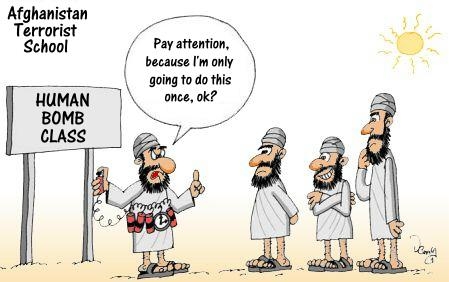
And that’s another thing about fundamentalism. Not only does it abound in fear of female sexuality but it also drips of sexual hypocrisy. Picture an Islamic martyr philosophy that promises suicide bombers a virgin filled orgy in heaven (72 virgins for every man!). To ensure that he is ready, many suicide bombers wrap their genitals in a protective material so that if nothing else, the penis will make it to heaven. Just what today’s bomb crazy fanatic needs, a paradise of women too inexperienced to judge his non-existent sexual skills. A good thing that, because these religious sects are nothing if not homosocial. So Boboshanti Rastafarians move in packs of men who call one man father, and the Taliban when not killing women, paint lipstick and eye shadow on their photographs and cross that messy line between homosocial and homosexual. For a pack of men who hate gays fundamentalists sure love to hang together.

But lest anybody think I’m anti Islam, the Christian nutcases aren’t much better. So in Jamaica, Pentecostal preachers still rail against the use of contemporary music in church, lambaste women for dancing, wearing pants or using hair products, and frequently leave women with the impression that rape is their fault. And while fundamentalist religion is devoutly religious, it has the intellectual certitude of a housefly. This is because thinking is anathema to religion and any form of intellectual discourse is tantamount to having kids with Satan. Fundamentalists have a virulent hatred of books, of philosophy and of the why? Question. Theirs is not the way to think, provoke or challenge. It is to obey, force and command others to be just like them. This flies in the face of Jesus Christ, and Mohammed who believed that the work of God began in the mind, not the fist.

Of course being anti-book serves a purpose. Because Fundamentalism is also one other thing: False. Reading is one of the surest ways to find that out. The big lie about fundamentalists, from the Ayatollah, to the Christian Coalition, to the I-served-in Germany-but- I wasn’t-a-Nazi-Pope, to that preacher in Jamaica who though gang rape could be dealt with by prayer, is that they are returning to something, a lost, cherished value. Fundamentalism preaches to be just that, a return to the fundamentals, the basics, and the core of the faith before years of bad influence corrupted things. But even a cursory glance at the three Abraham based religions proves that to be absolutely untrue.

There’s not a single religion that began as fundamentalist. Not Islam, which in the Crusades was exemplary for its open-mindedness, Not Judaism and certainly not Christianity whose Jesus was killed precisely because he did not conform to a fundamentalist vision of a messiah. On the contrary, these religions began as open-minded reactions to rigid institutions and that is why they attracted numbers to begin with, in particular, women. Fundamentalism on the other hand is a reactionary movement. A return to a warped idea of basics that never existed, that comes frequently with a violent agenda. In this regard the conservative Christian is no different from the Taliban. Nothing in the bible says to support the Iraq invasion or prayer in schools. Nothing in the Koran says that while sex with an 8 year old is statutory rape, sex with a 9 year old is ok. These are laws invented by repressed men to suppress everybody else. And nobody suppresses like a repressed man. What these movements also have is large populations of disenfranchised men, lacking relevance in their own countries that are suddenly empowered to take things by force. Fundamentalism is as much about economics and social disenfranchisement as it is about religion.

In Christianity there are virtues and vices. But there is a third direction, a far opposite of vice but just as bad. This is called perversion. For example, purity is the virtue. Licentiousness is the vice. But there is a perversion as well and that’s called puritan. A warped, extreme version of the original value that causes as much damage as the vice. So a puritan is a pervert. So is a fundamentalist. In their world a righteous man can do no wrong, rape is the woman’s fault, everybody else is going to hell and they never ever have to hold themselves accountable. Rastafari is not much better in this regard as the Rastafarian frequently “licks out” against the Babylon in front of him but never holds a mirror to himself. And let’s not even get started on how Rastas treat women having their period.

I know this sounds like an unfocused rant, but the execution of 16-year-old girls pisses me off. A preacher scolding a congregation for telling the police that a deacon orchestrated a gang rape horrifies me. A false doctrine trying to pass itself off as an older vision insults my intelligence and the bloodshed these religions leave in their wake convinces me that there is no God in them. The great thing about Fundamentalism is that something blazing that intense is bound to burn itself out. There is only so much that victims can take. So next time, Capleton screams More Fire, slip some dynamite in his pocket and light it.

Monday, July 17, 2006

On Black Swan Green


When I'm not working on selling my soul to Wolfmother, I try to read. Sometimes a new book leaves me pissed off at the wasted time that could have been spent toe clipping. Other times and it almost never happens, I'm thrown for a loop, bracing myself in the chair and gasping in wonder. Lately I've been doing that over David Mitchell's brilliant, brilliant Black Swan Green.

Black Swan Green, to be simplistic, is the story of Brit boy Jason Taylor, thirteen years old who amid trying to hide both his stammer and erections with increasing failure, goes through thirteen months of among other things the Falkland Islands conflict, truly horrendous bullies, and the disintegration of his parent's marriage. Child protagonists work best not when they have little idea of what's going on but when they can see all the pieces yet nothing adds up. It's heartbreaking how Jace, for all his cleareyed perception cannot fathom why adults make the messes they do.

Black Swan Green has been called the "British Catcher in the Rye," but this couldn't be more misleading. This is not adult angst trying to fit into kids' shorts. Jace remains wonderfully, unforgettably a kid even after his first snog and feel up. Notice I call the kid Jace. That because, like the very best first person novels, Huck Finn, Great expectations, you fall in love with this kid from the very first line, which you'll simply have to buy to read. But why am I selling David Mitchell? He's been nominated for the Booker twice and will most likely win this year. Lord knows he doesn't need this struggling writer's help

He blurbed my friend T. Cooper's book (at least I think he did...not sure now) and last year when I ran into her I asked, "Do you ever get the feeling that David Mitchell is unnecessarily brilliant? That he got two of whatever it is we got one of? She laughed. After this book I'm convinced that I've been selling my soul to the wrong people.

Sunday, July 09, 2006

The Magic N****r


America’s finest band, TV On The Radio, opened their first album, Desperate Youth, Bloodthirsty Babes with the finest lyrics I’ve heard in years:
“Woke up in a Magic Nigger Movie/ with the bright lights pointing at me as a metaphor”
As great lyrics often do, these got me thinking. We all like our black people tagged and profiled, but The Magic Nigger was a brand new old thing, a species that was always among us, but perhaps not noticed until now. That may be because so many other Negroes got in the way. There is the Mammy of course and the Uncle since everybody knows that black kids ain’t got no daddy. There’s Steppin’ Fetchit: the well-meaning but intellectually spotty coon who sho is funny. There’s the Oreo who is white on the inside and the Black whitey who plays the racially vague card. There's Miss Sassy Black Woman, the post hip-hop Mammy showing sass but no ass. Then there is, as Greg Tate once called him/her, the black sex machine gone berserk. An insidious creature typified in the text of Mandingo and the subtext of Alien. Lately we’ve have had to deal with the thug who came rather curiously in hetero and homo varieties. So boisterous have these stereotypes been in the jostling for attention that the Magic Nigger almost passed by unnoticed. Almost.

But bringing attention to oneself is anathema to the Magic Nigger. His mission in life is to bring attention to the white people around him. The Magic Nigger is no Bojangles. In fact most times the Magic Nigger is more intelligent, more refined and just plain smarter than the white hero. He is not really the good guy, but like Will Smith in The Legend of Bagger Vance, his purpose is to make the good guy better. The Magic Nigger’s purpose is to humanize the bitch as Wanda Sykes did for Jane Fonda in Monster In Law. His purpose is to help the white man tap into his latent humanity as Morgan Freeman did for Miss Daisy; to have him recognize his inner power, as Morgan Freeman did for Jim Carrey in Bruce Almighty; or to introduce him to cool new gadgets as Morgan Freeman did for Christian Bale in Batman.

The Magic Nigger is not as old as blackface, but he is older than Will Smith. Sidney Poitier and Bill Cosby may have been the first two. These men were not maids with big breasts or butlers with big eyes, but smart scene-stealers with little big minds (a Magic Nigger like any other black character “steals” a scene). In I-Spy, Cosby was Ivy league educated, cultured, refined and poised in a way that challenged black stereotypes before he became one. In To Sir With Love, Poitier was a teacher whose job it was to teach one-dimensional white kids how to become three-dimensional human beings, even if he never moved from one dimension himself.

In some cases the Magic Nigger has actual magic. Look no further than The Green Mile where Michael Clark Duncan, mistaken and imprisoned as a Black Sex Machine Gone Berserk, turns out to be a truly magic nigger after all, who uses his powers, to heal rats and the brutal blockage of Tom Hank’s urinary tract. Ditto Whoopi Goldberg in Ghost, a Miss Sassy Black Woman who becomes another magic nigger with real magic, a blackie who didn't even know she could talk to them dead people until the white ghost shows up. Bagger Vance is such a force of nature; effortless, natural, instinctual, primitive that one is not even sure he exists, hence The Legend Of.

The Magic Nigger has a fantastic head, but no penis. Harry Belafonte, a man blessed with foresight in those earlier years turned down the roles that Sidney Poitier eventually accepted because of this reason. So the story is changed in the Pelican brief to make sure that Julia Roberts and Denzell Washington do not have sex, despite showing a screen chemistry that Roberts has not drummed up with another man since. The Magic Nigger is here to help the girl not have sex with her. A magazine recently pointed out that Morgan Freeman and Ashley Judd had the sexual chemistry that neither Brad Pitt nor Tom Cruise has ever managed with a woman on screen and yet they will never, ever do it. But it’s not just the missing penis that makes the magic nigger unreal, but also the missing conflict.

Conflict is when a character starts at x, goes through y to get to z. For the magic nigger who is perfect to begin with it’s xxx. He is the noble savage transmogrified in a three-piece suit. His purpose is to add the third dimension to the white character, not himself. Some people view this as progress.

Not even Spike Lee could kill the magic nigger. That’s because the magic nigger is a fixture of the white movie, not the black one. The magic nigger is the refuge of stability in a turbulent white life. It where Mel Gibson needs to go to be reminded that family after all is everything. Only in movies it seems do large black families sit to have dinner. No matter what the occasion—Every day is thanksgiving day in the Magic Nigger household. And given that the Magic Nigger may show but never reveal, he or she doesn’t even have to be black. Bruce Lee was The Green Hornet’s magic boy for so long that it’s a wonder he ever entered the dragon.

But like every other film idea, this concept was stolen from Literature, dating back to the first magic nigger, Uncle Tom. Uncle Tom has no real flaws or real humanity for that matter, but he feels the conflict of slavery and racism in all of his pulse-less being. Were James Bond an American franchise, Q would have been black. He actually became black in Batman Begins.

Othello, the first and still the most comprehensively real portrait of a black man in “white” literature is still played mostly by white actors in brownface. Othello’s rage is not so much black rage as warrior rage, the anger of a man taught nothing but, who lives by his passions and is doomed by them as well. His murder of Desdemona may be the most sexual moment in the play, but Shakespeare exposes the scene for what it truly is; an act of jealousy, rage and perversely love that sprung from the deepest betrayal. It’s a moment of stark, shocking clarity; a moment that revels in the glory and flaws of truly three-dimensional black hero. We have not seen a black character with so much colour since.

Americans Vs. Brits

Geoffrey Philp has a very interesting blog about why North American readers may not be as open to Caribbean fiction as the British, but I'm not so sure. I've been thinking about this topic for a while, because this was an assumption I made about my own work before it was published. But since publication I have experienced the complete opposite. While Americans from critics to writers to readers have embraced my novel, the Brits have not been so keen. No British publisher would touch the book and the sole Brit review was smarmy and patronising, comparing me to Andrew Salkey. This of course flies in the face of our conception that the British audience is more readily receptive to a Caribbean book.

But I think it is more than that. Older generation Caribbean writers such as Selvon, Naipaul or even Roger Mais were educated and cultured in a British sensibility, whereas writers such as myself came alive through dancehall, alternative rock, hip-hop and Starsky and Hutch. Hell, my book opens with a quote from Captain Beefheart.

I think also that the courage to use dialect came from Twain, Faulkner and Toni Morrison—the Americans and not british writers or English Lit teachers who viewed such a thing with at best bemusement, at worst scorn, hence the slightly patronising tone to Brother man and the continuing belief by readers Jamaican and otherwise that anything in dialect must be a Louise Bennet minstrel show.

Whatever the reason, I've had a better response from Americans than Brits. Go figure.

Sunday, June 11, 2006

When You’re not White Enough to write a Black Novel

I’ve always been a religious man, so I spent some good time praying that the “Post-National” world that Elliot Weinberger dreamed of in the summer 2005 issue of Tin House comes true. In those pages, Weinberger praised the growing prominence of the Post-National writer, the writer of exotic origin and tricky residence who was in the middle of revolutionizing western literature. But he also lamented that this revolution has so far been silent as the American audience had yet to embrace it.

As one of those writers he spoke of, I have found myself crippled by the choices that a supposedly less cosmopolitan reading world has left me with. After forty-five agents and fifteen publishers told me exactly the same thing, that my novel was too narrow, too dark, too foreign, not very accessible (but well written!) I was left with a dead manuscript that I destroyed and a writing career that was pretty much forgotten.

The fact is everybody blames the American reader for his narrow focus while envying his stacked wallet. And while there may be some truth to that, the far bigger problem is the industry that refuses to believe in the intelligence and open-mindedness of that very reader. The industry that will not take a chance on non-american, non-suburban white fiction unless it fits two very defined parameters, both of which I tried writing after my first novel was rejected.

The first is the immigrant novel. On paper it sounds foreign and exotic, but this is the most American of novels, for it details the quintessential American experience: Coming to America. The formula is pretty easy to trace. Ingredients: The stern patriarchal father who is beaten by a world that doesn’t want him; where he can’t be king, where his children no longer listen and where he is deplumed, de-wealthed and de-sexed. He grows withdrawn, bitter and sometimes malevolent. But let’s not forget the matriarch, the spiritual keeper of the cultural flame, the difficult one; the one in the family who never learns English and wants to get her daughter married as soon as possible. Coming through the front door at that very moment is the same aforementioned daughter, dressed like Britney and talking ghetto. Leaving through the back door is the son, having rebelled and felt the consequence, he drifts into that American no man’s land, making pit stops in gangs, drugs or troubled racial and/or sexual identity. In a very great sense the essential theme of these novels, the duel-duet of clashing cultures has been an American story ever since John Smith gave Pocohontas small pox.

It’s a cynical statement to be sure, but the cynicism is in response to the expectations of the publishing industry and not the novels themselves, some of which have been the most striking fiction of past 30 years. But in opening a tiny space, these novels shut out all other forms of post-national fiction save one: The white man trapped in the heart of darkness novel.

It’s a hell of a thing when you’re not white enough to write a black novel. On my 63rd rejection I hatched what seemed to be a clever idea. I would re-submit my novel to the same agents and publishers—only this time I would use my good Australian buddy’s photo and an invented bio about my life in the Caribbean bush, a sort of Serpent and Rainbow redux. Given that few editors had even read the manuscript I had little concern that the same reader would come across the novel twice.

A white man had just won the Booker prize for a novel about an Indian (Yann Martel for Life of Pi), and I would merely be joining one of English literature’s most enduring and at times offensive traditions, a malady that has afflicted nearly every cosmopolitan white writer not named Gordimer: The White man or woman who travels to the exotic land of darkness to find his inner light novel. The formula, hatched by Defoe, perfected by Conrad and being reinvented as I write this has long been the proven way to make foreign fiction work. Set the jaded white among the poor but proud natives and sooner or later he will learn something deep about him or herself, even if the natives never evolve from the noble or ignoble savages that they are.

Again, This is supposedly cosmopolitan fiction that is anything but, for it merely reinforces the essential differences (those pesky, backward natives) or cosmic similarities between people who try to co-exist and never moves beyond that point. As for the non-white characters, even the word character is a stretch as these men and women never evolve, never contradict, never waver, never grow, never change, in short, never become human.

And yet there is another kind of white penned, colored story, that goes even deeper than that; what Dale Peck calls the feat of Cultural Ventriloquism. In this novel the trick is to show just how deep in a foreign culture one can dig, the deeper the better. It’s the Jamaican novel that Russell Banks or Michael Tolkin can sell, but Patricia Powell cannot. It’s the Anansi story that becomes a gold mine for Neil Gaiman, but a black hole for Earl Lovelace. Unless one plays the rootless, quasi-mestizo, I’m both and neither angle that VS Naipaul plays. The fact is, the black story is far more sellable when it comes from a white voice.

Those were my choices as a writer, so I chose a third, to give up on writing altogether. No one wants to write a book that nobody will read, no matter how post-national you think you are. And yet not everybody wants to write something merely for its supposed commercial potential no matter how it easy it is to write it. There were so many people in this industry convinced that I had written a book that will never be read that I believed it myself, went back to writing commercials and burnt the manuscript.

But that was a black and white response to a black and white fallacy of a writing world that has always been gray. Or to put it in a less convulted way, I hadn’t figured on the fourth option: independent publishers. Through a series of accidents that one should never try at home, my manuscript found its way into an acclaimed writer’s hands who sent it to and agent who pretty much told me all I’ve heard before (I love it! Nobody else will!) and an independent publisher, Akashic Books who fell for the manuscript and has since published it. But even in that situation I sometimes came upon two opposing halves of the same prejudice. While one side rejected the post national author and one side embraced, both were convinced of the writer’s limited potential (with the notable exception of the guy who published my book). Maybe both are right.

The problem with this insistence on formula is that the American reader has already proven it untrue. Formula cannot explain the success of Khaled Rossini’s Kite Runner or the failure of George Hagen’s The laments. It obscures Orham Pamuk’s success with My Name is Red.

What does that leave for us, post nationals, for whom no amount of bitterness can obscure one true fact: that we want to break into America? Write for the people you know and hope everybody else catches on? I really don’t know. I know I’m selling books one at a time, in independent bookstores and cafés all over the US, trying to prove that a story set in a Jamaican village is not that much different from one set in a small, American town, and even if it is, that we still love heroes, hate villains and want good to triumph over evil. It’s both rewarding and frustrating and I do question why am I doing this every day.

But as I write my second book the same demons have come back to haunt me. Acclaim is nice, such as it is, but how about some sales? How local can I be? Should I move my characters to Brooklyn? If I move to a larger publisher (assuming they would want me) will the New York Times review my book? How much Jamaican dialect is too much? Do I have the requisite 4.25 white characters? And what language should they speak? How will all of this sell? Will William Morris give me a call?

These are all terrible things to take to a writing desk, so in the end I think of nothing but the story. I have to hold to the belief that book and reader have an almost cosmic destiny to meet. And when they do, no barrier whether it be language, race, culture or nationality will stand in the way. In other words, Elliot, I’m placing all my bets on the hope that there are more people in the world just like you.

So Matt thinks the Beatles are Overrated...


Back in my younger days when I thought the Beatles were overpraised I developed a major thing for the Who. But since then my opinion has done a huge 360 and I believe without a shadow of a doubt that they were the greatest rock band of all time. Also if one agrees (and there's really no reason not to) that punk was really just Chuck Berry plus feedback, then they came pretty damn close to inventing punk too. Now while I believe there are dozens of reasons why the Beatles are the greatest band of all time, I'll choose just one. Take a look at the type of crap that went to number one the week before they came to save us:
http://www.songfacts.com/detail.php?id=1891