
1. How many of the Rutgers Women were Ludacris Fans?
2. How many black women know the lyrics to Bitchez Ain't Shit? Big Pimpin'?
3. How many blacks with victim complexes does it take to cash a welfare check?
4. Why is it that every time a Black athlete falls from grace the reason must be in some way because of something The Man did back in Slavery? (Thanks for that one, Matt)
5. When is Public Enemy going to apologise to Elvis? (Pat Boone now, there's somebody who needs a public enema)
6. When is John Ridley's The Manifesto of Ascendancy for the Modern American Nigger going to become required reading for all black people?
7. Do we still need the word Nigger?
8. When are people going to realise that Michael Eric Dyson is the Geraldo Riviera of Black Opinion?
10. And Al Sharpton may be smarter than you think?
12. Isn't calling yourself a black queen or king just a deluded as calling yourself a nigga or bitch? My foremothers fought and died for the right to be called woman so how dare we tell them that it's not good enough?
13. For all the supposed blackness of hip-hop when did we choose to forget that the white media gave it props first?
14. Why is it that any black person who does not speak in ebonics is assumed to be acting white? Nobody accuses a redneck of not keeping it real if he goes to English Class.
15. Why are decorum, class, deportment, taste, and openmindedness considered white values?
16. What does it say about the black people who think so?
17. Who would have listened had he said, I'm a tell y'all. I has a dream in the heah house tonite! Sho Nuff! Sho nuff, daggumit. Free at last mah homeys! Free at last, mah Niggers and Niggettes!
18. Why are there still more black men in prison than in college?
19. How much of this is our fault? And when are we going to hold ourselves accountable?
20. Would Martin Luther King be proud of us or disappointed?
21. (Question inspired by Mar) How come I'm acting WHITE if I listen to white acts like Pig Destroyer, Feist, Kings of Leon and Mastodon, but BLACK if I listen to whitebread acts like John Mayer and Maroon 5?
Wednesday, August 22, 2007
Tuesday, August 07, 2007
On Hateration
It took me quite a while to realize that my list of friends who hate Jack Kerouac’s On The Road far outstripped my list of friends who actually read the book. I don’t think this means that I love a pack of liars so much as a posse of amateur but enthusiastic debunkers, people still young enough to stick to the contrasting opinion even if none is necessary, especially if the prevailing opinion was once the transgressive one. Put a simpler way, they hate shit that is cool just because everybody keeps saying it’s cool. Like my friend who hates Nirvana because everybody loves them but loves the album Nirvana fans dislike (MTV Unplugged), the consensus record for people who don’t really like Nirvana. One would be quick to call such people contrarians but they are something far more simplistic and far less tolerable: Haters.
Or Haytas. You are forgiven if unaware that Hip-hop has irrevocably altered the word, just as surely as Jamaicans changed the meaning of ignorant. Haters no longer hate, they hate on. They pile on disapproval for transparently selfish purposes. Hateration is mean spiritedness with a personal agenda. Sometimes it’s dislike for no other reason than there being a season for disliking. Other times it’s dislike for someone or something because they have become too ubiquitous, popular, correct, cool, or sometimes because they have been around too long. When Notorious BIG rapped about mo’ money, mo’ problems, the chief problem was the hater, the miserable (and less successful) who sought companions in their misery. People who can’t stand success in any shape or form not their own and to tear down such success even in their meager sphere of influence.
It’s always been cool to hate any book called a literary masterpiece. In one belligerent bout of hateration, Nabokov tore Dostoevsky to pieces, perhaps because he was sick of seeing Crime and Punishment being placed ahead of Lolita in Best Of... lists. For years the beats have been easy targets, first for the literati, then the threatened establishment, and then for every lit brat short of pubic hair but long on attitude, trying to make a name for himself by openly despising someone else. The more canonized the better. So many people view On the Road as an overrated novel that it might shock people to know how few people have actually read it. And that’s another thing about Hateration. Scratch off a hater and you’ll find its incestuous little cousin, the bullcritter.
Bullcrit. Most of us have done it and some of us will do it today. Bullcrit is the critical praise or damnation of a work one has never seen, or read or heard. More often than not we can pull it off because the average person is, without putting a fine point on it, knowledgeable of little and critical of even less. I was a bright and shining bullcritic until I embarrassed myself with the Great Gatsby, a book I have faked-read for years. “Just read the first chapter,” I said. “A pitch perfect example of the reliable narrator. How about that tone? Isn’t Gatsby the first truly modern novel? The first 20th century American novel of its own age? Isn’t it informed by post world war one weariness and melancholy?” I could go on and frequently did until I used the novel in my argument for the return of melodrama to fiction, saying, “that scene where Gatsby dies in the car crash is pure melodrama.”
We bullcrit novels we haven’t read, turned on I guess by the act of hating the loved. But hateration isn’t limited to dead novelists. In pop music, where the term came from, hateration is de rigueur. Missy Elliot’s sly single ‘Gossip Folks’ opens with samples of haters who can’t stand the bitch for eating two crackers a day and wonder if she’s having Michael Jackson’s baby. It’s funny as hell to be sure, but also serious. Missy knows that she’s at the stage where people will hate simply because it’s her time to be hated. Jamaicans can haterate with the best of them. Every time I start a discussion about Jamaican musician Sean Paul, the typical Jamaican’s typical response is “but he sucks live.” Now given that Sean performs 99.9% of the time to faraway audiences in faraway lands, such a judgment is downright impossible for a Jamaican to make. So I usually call them out on it. “And when did you see him perform?” I ask, “because I saw him at a club on Puerto Rican day and he blew everybody away.” The Jamaican will then trot out some irrelevant example, a concert from five or even ten years ago, or some award show with dozens of reasons for a bad performance, not one being the performer.
Even the seemingly highbrow sometimes go for the down and dirty. Rolling Stone Magazine, clueless as ever, lionized The White Stripes’ most overrated records, Elephant and Get Behind Me Satan, one guessed because they have never paid attention to them before and did not want to seem behind the curve. In fact Rolling Stone has mastered the art of loveration, loving a band simply because it’s now their time to be loved. And since they are usually off by a couple years, they frequently champion the major label debut and waste column inches explaining why it is better than their obscure indie records. But now that the love-in with White Stripes is over, not only have they given Icky Thump—a stunning return to form— the dreaded 3 ½ star review, the recently did a story on new guitar heroes and ignored Jack White. They did however feature John Mayer.
Hateration is hypocrisy, envy and covetousness all mixed into one despicable package and taken to extreme levels. It results in the death of Biggie Smalls and the debasing of the same idols that were created last week. It’s also ignorance (pre-not post Jamaican definition of the word) made into an art and a science; a dimwitted dismissal of something one has never heard seen or felt, in essence something we have always had with us but used to call by another name:
Prejudice.
Or Haytas. You are forgiven if unaware that Hip-hop has irrevocably altered the word, just as surely as Jamaicans changed the meaning of ignorant. Haters no longer hate, they hate on. They pile on disapproval for transparently selfish purposes. Hateration is mean spiritedness with a personal agenda. Sometimes it’s dislike for no other reason than there being a season for disliking. Other times it’s dislike for someone or something because they have become too ubiquitous, popular, correct, cool, or sometimes because they have been around too long. When Notorious BIG rapped about mo’ money, mo’ problems, the chief problem was the hater, the miserable (and less successful) who sought companions in their misery. People who can’t stand success in any shape or form not their own and to tear down such success even in their meager sphere of influence.
It’s always been cool to hate any book called a literary masterpiece. In one belligerent bout of hateration, Nabokov tore Dostoevsky to pieces, perhaps because he was sick of seeing Crime and Punishment being placed ahead of Lolita in Best Of... lists. For years the beats have been easy targets, first for the literati, then the threatened establishment, and then for every lit brat short of pubic hair but long on attitude, trying to make a name for himself by openly despising someone else. The more canonized the better. So many people view On the Road as an overrated novel that it might shock people to know how few people have actually read it. And that’s another thing about Hateration. Scratch off a hater and you’ll find its incestuous little cousin, the bullcritter.
Bullcrit. Most of us have done it and some of us will do it today. Bullcrit is the critical praise or damnation of a work one has never seen, or read or heard. More often than not we can pull it off because the average person is, without putting a fine point on it, knowledgeable of little and critical of even less. I was a bright and shining bullcritic until I embarrassed myself with the Great Gatsby, a book I have faked-read for years. “Just read the first chapter,” I said. “A pitch perfect example of the reliable narrator. How about that tone? Isn’t Gatsby the first truly modern novel? The first 20th century American novel of its own age? Isn’t it informed by post world war one weariness and melancholy?” I could go on and frequently did until I used the novel in my argument for the return of melodrama to fiction, saying, “that scene where Gatsby dies in the car crash is pure melodrama.”
We bullcrit novels we haven’t read, turned on I guess by the act of hating the loved. But hateration isn’t limited to dead novelists. In pop music, where the term came from, hateration is de rigueur. Missy Elliot’s sly single ‘Gossip Folks’ opens with samples of haters who can’t stand the bitch for eating two crackers a day and wonder if she’s having Michael Jackson’s baby. It’s funny as hell to be sure, but also serious. Missy knows that she’s at the stage where people will hate simply because it’s her time to be hated. Jamaicans can haterate with the best of them. Every time I start a discussion about Jamaican musician Sean Paul, the typical Jamaican’s typical response is “but he sucks live.” Now given that Sean performs 99.9% of the time to faraway audiences in faraway lands, such a judgment is downright impossible for a Jamaican to make. So I usually call them out on it. “And when did you see him perform?” I ask, “because I saw him at a club on Puerto Rican day and he blew everybody away.” The Jamaican will then trot out some irrelevant example, a concert from five or even ten years ago, or some award show with dozens of reasons for a bad performance, not one being the performer.
Even the seemingly highbrow sometimes go for the down and dirty. Rolling Stone Magazine, clueless as ever, lionized The White Stripes’ most overrated records, Elephant and Get Behind Me Satan, one guessed because they have never paid attention to them before and did not want to seem behind the curve. In fact Rolling Stone has mastered the art of loveration, loving a band simply because it’s now their time to be loved. And since they are usually off by a couple years, they frequently champion the major label debut and waste column inches explaining why it is better than their obscure indie records. But now that the love-in with White Stripes is over, not only have they given Icky Thump—a stunning return to form— the dreaded 3 ½ star review, the recently did a story on new guitar heroes and ignored Jack White. They did however feature John Mayer.
Hateration is hypocrisy, envy and covetousness all mixed into one despicable package and taken to extreme levels. It results in the death of Biggie Smalls and the debasing of the same idols that were created last week. It’s also ignorance (pre-not post Jamaican definition of the word) made into an art and a science; a dimwitted dismissal of something one has never heard seen or felt, in essence something we have always had with us but used to call by another name:
Prejudice.


Monday, July 23, 2007
What’s the Matter with my Web 2.0?
Maybe I should call this blog, Am I a book snob 2.0. Or, the hidden benefits of elitism. One of the crucial facts forgotten about American democracy is that a power elite shaped its fundamental principles. Had the process of forming a democracy been itself democratic many would have preferred the safety (or cowardice) of sticking it out with mad King George. I’m thinking about this because of Andrew Keen’s book, The Cult Of The Amateur, a lightning rod of a book that has sparked an onslaught of criticism mostly from people who haven’t read it.
The problem is that the nature of the attacks all but proves Keen’s point and he knows it. His all out assault on web 2.0, particularly it’s user generated content has provoked vicious responses from that very same group and the first thing that’s noticeable is how amateurish most of the criticism is. Simple, grade 2 mistakes like attacking the man instead of his argument. Attacking the man because one had not bothered to read his book, and not seeing how obvious the ignorance. Calling him a motherfucker, for example. This book has provoked constructive debate but that is lost on people who because of the very nature of their sites or blogs have never applied genuine, informed critical thinking. They have never fact checked a blog to make sure there is truth to back up an argument, and have never been in a situation where simply saying that he is a dumb motherfucker is not enough. This of course proves his point even though one cannot escape Keen’s own personal stake in the matter—perhaps his own bitterness at having launched an Internet company that quickly went bust.
He may also be ignoring though he claims not to, that the same Internet is responsible for breaking truths that the mainstream media did not or would not. Would anybody have been the wiser about James Frey were it not for Smoking gun? I tread lightly because this is after all a blog and not only has it facilitated my own expression but also my communication with you, something that would not, has not and will not happen in the mainstream media where my voice simply does not count. And the stakes are not even as high for myself as it is for a Lebanese teenager who has nothing but a modem. That said there are things that I have written in my blog that would not have passed the first round of fact checking that I left untouched because I knew nobody would call me out on it. This is dangerous, something I have started to call Wikipedia wisdom. I come across Wikipedia wits all the time and the danger is not that they are unaware that Wikipedia is to a huge percent incorrect if not outright false, but that they do not care. Truth has become as flexible a commodity as trendiness and not half as necessary.
Perhaps the biggest myth about web 2.0 is it being a universal equalizer. A tool that has made the ordinary person, as powerful as any pundit. But not only is this untrue but the deception is perilous. The new boss is really no different from the old boss except that the slave doesn’t think he has a master. Aintitcool.com may have seemed like the voice of the people but it is really the voice of a few steering many, sometimes to bad movies that merely fit in with kinks of 34 year old virgins, movies like Me Myself and Irene. Watch how the web shaped the look of Transformers, where overgrown boys, still terrified of icky girls were responsible for eliminating a female transformer.
And then there is Wikipedia. The end result of Wikipedia being accepted as fact is not that truth becomes irrelevant (that’s the beginning), but that truth become easily manipulated. Contrary to what you may think, the internet shrinks opinion as much as it expands it. You may think that your gmail account is safe and easily accessible, and it is. But g-mail is also two gigs of your life that can be wiped out in a second by somebody you have never met. And there’s nothing you can do about it. A book in my hand, in my closet or hidden in my cellar means that when the oppressors come I can hide my knowledge, instead of watching it being destroyed by the whim and fancy of whoever is the programmer. Web 2.0 is power but it means nothing if the light goes. That’s an entire universe erased by a power switch. Youtube is ultimately controlled and the controller is not you.
Another big problem with web freedom so far is that is has not come with web responsibility, a fact reassuring to pedopliles and rumourmongers everywhere. So a biography of Anderson Cooper can make a huge detour into his sexuality, plunging into hearsay and hear-think and departing from fact and decorum, as if whom he is sleeping with is as important as how many died in Hurricane Katrina. I have seen in my own case how web reading has hurt my ability to read and teach books. Even now I have to force myself to not ‘web read’ novels— to not scan the first four or so lines, then ‘scroll’ to the bottom and turn the page.
Andrew keen is keen on pointing out how much the new web world has destroyed the old, better establishment, but nobody had to murder someone so dead set on suicide. A better point to be made is that the world that web 2.0 is creating is far inferior to the one that came before it. The Blind leading the blind hoping they’ll all eventually see—or, more likely conclude that seeing is way overrated anyway. A bigger problem is the new boss destroying a world it is not equipped to supplant. Or at least not yet. You may think that a voice from the street means more that a Walter Cronkite, but should a Hurricane Katrina happen or a President gets assassinated you need a Cronkite to hold 250 million people together. You need Britannica and its researched facts because should you need to save a life, a Wikipedia tip could just as likely kill. You need an amazon.com where people who hate this blog cannot then go on my page, write a barrage on disgusting reviews despite not having read the book, and drive my rating down to one star, knowing that the American reading public trusts other readers more than critics.
But as I said before Andrew keen makes the same mistake that traditional media makes, screaming bloody murder while pointing the gun at himself. By trying to stretch his mouth wide open to include pornography, pedophiles and Youtube he exposes himself instead as a luddite in Bill O'Riley drag. You Tube may be a world where "Nothing seems too prosaic or narcissistic for these videographer monkeys," but it is also the only place where you’ll find James Brown on the TAMI show, or Lebanese kids showing their side of the whole bombing last year, because the mainstream media will show neither. Stephen Colbert knows that had he fought Youtube instead of left it alone, many of his present viewers would have ignored him. Keen attacks the wisdom of the crowd and the lack on an information central but fails to remember how easily manipulated information was even up to recently, which is why people still have a pleasing sense of nostalgia about Operation Desert Storm and trust anything Fox News channel tells them.
He also has to face the fact that web 2.0 is not going away, in fact a web 3.0 is on the horizon already. He may also be ignoring that many blogs have gone on to genuine intelligent content whether that be the range of opinion on The Huffington Post, or the simple elegance and grace of The Sartorialist. Unlike Keen, I see intelligence in an upward not downward curve. Human beings inevitably want more and that greed for information—not more, but better information— is always good. That greed has sparked everything from the creation of the wheel to outer space exploration to the discovery that the world is round. We are curious and hungry creatures and while we feel safety in the wisdom of the crowd, that crowd still needs that one kid who realizes that the Emperor is naked. What Keen does not realize is that this lone seeing eye —The web 2.0 Galileo or Dorothy Parker will come from the same crowd that is right now flying blind.
The problem is that the nature of the attacks all but proves Keen’s point and he knows it. His all out assault on web 2.0, particularly it’s user generated content has provoked vicious responses from that very same group and the first thing that’s noticeable is how amateurish most of the criticism is. Simple, grade 2 mistakes like attacking the man instead of his argument. Attacking the man because one had not bothered to read his book, and not seeing how obvious the ignorance. Calling him a motherfucker, for example. This book has provoked constructive debate but that is lost on people who because of the very nature of their sites or blogs have never applied genuine, informed critical thinking. They have never fact checked a blog to make sure there is truth to back up an argument, and have never been in a situation where simply saying that he is a dumb motherfucker is not enough. This of course proves his point even though one cannot escape Keen’s own personal stake in the matter—perhaps his own bitterness at having launched an Internet company that quickly went bust.
He may also be ignoring though he claims not to, that the same Internet is responsible for breaking truths that the mainstream media did not or would not. Would anybody have been the wiser about James Frey were it not for Smoking gun? I tread lightly because this is after all a blog and not only has it facilitated my own expression but also my communication with you, something that would not, has not and will not happen in the mainstream media where my voice simply does not count. And the stakes are not even as high for myself as it is for a Lebanese teenager who has nothing but a modem. That said there are things that I have written in my blog that would not have passed the first round of fact checking that I left untouched because I knew nobody would call me out on it. This is dangerous, something I have started to call Wikipedia wisdom. I come across Wikipedia wits all the time and the danger is not that they are unaware that Wikipedia is to a huge percent incorrect if not outright false, but that they do not care. Truth has become as flexible a commodity as trendiness and not half as necessary.
Perhaps the biggest myth about web 2.0 is it being a universal equalizer. A tool that has made the ordinary person, as powerful as any pundit. But not only is this untrue but the deception is perilous. The new boss is really no different from the old boss except that the slave doesn’t think he has a master. Aintitcool.com may have seemed like the voice of the people but it is really the voice of a few steering many, sometimes to bad movies that merely fit in with kinks of 34 year old virgins, movies like Me Myself and Irene. Watch how the web shaped the look of Transformers, where overgrown boys, still terrified of icky girls were responsible for eliminating a female transformer.
And then there is Wikipedia. The end result of Wikipedia being accepted as fact is not that truth becomes irrelevant (that’s the beginning), but that truth become easily manipulated. Contrary to what you may think, the internet shrinks opinion as much as it expands it. You may think that your gmail account is safe and easily accessible, and it is. But g-mail is also two gigs of your life that can be wiped out in a second by somebody you have never met. And there’s nothing you can do about it. A book in my hand, in my closet or hidden in my cellar means that when the oppressors come I can hide my knowledge, instead of watching it being destroyed by the whim and fancy of whoever is the programmer. Web 2.0 is power but it means nothing if the light goes. That’s an entire universe erased by a power switch. Youtube is ultimately controlled and the controller is not you.
Another big problem with web freedom so far is that is has not come with web responsibility, a fact reassuring to pedopliles and rumourmongers everywhere. So a biography of Anderson Cooper can make a huge detour into his sexuality, plunging into hearsay and hear-think and departing from fact and decorum, as if whom he is sleeping with is as important as how many died in Hurricane Katrina. I have seen in my own case how web reading has hurt my ability to read and teach books. Even now I have to force myself to not ‘web read’ novels— to not scan the first four or so lines, then ‘scroll’ to the bottom and turn the page.
Andrew keen is keen on pointing out how much the new web world has destroyed the old, better establishment, but nobody had to murder someone so dead set on suicide. A better point to be made is that the world that web 2.0 is creating is far inferior to the one that came before it. The Blind leading the blind hoping they’ll all eventually see—or, more likely conclude that seeing is way overrated anyway. A bigger problem is the new boss destroying a world it is not equipped to supplant. Or at least not yet. You may think that a voice from the street means more that a Walter Cronkite, but should a Hurricane Katrina happen or a President gets assassinated you need a Cronkite to hold 250 million people together. You need Britannica and its researched facts because should you need to save a life, a Wikipedia tip could just as likely kill. You need an amazon.com where people who hate this blog cannot then go on my page, write a barrage on disgusting reviews despite not having read the book, and drive my rating down to one star, knowing that the American reading public trusts other readers more than critics.
But as I said before Andrew keen makes the same mistake that traditional media makes, screaming bloody murder while pointing the gun at himself. By trying to stretch his mouth wide open to include pornography, pedophiles and Youtube he exposes himself instead as a luddite in Bill O'Riley drag. You Tube may be a world where "Nothing seems too prosaic or narcissistic for these videographer monkeys," but it is also the only place where you’ll find James Brown on the TAMI show, or Lebanese kids showing their side of the whole bombing last year, because the mainstream media will show neither. Stephen Colbert knows that had he fought Youtube instead of left it alone, many of his present viewers would have ignored him. Keen attacks the wisdom of the crowd and the lack on an information central but fails to remember how easily manipulated information was even up to recently, which is why people still have a pleasing sense of nostalgia about Operation Desert Storm and trust anything Fox News channel tells them.
He also has to face the fact that web 2.0 is not going away, in fact a web 3.0 is on the horizon already. He may also be ignoring that many blogs have gone on to genuine intelligent content whether that be the range of opinion on The Huffington Post, or the simple elegance and grace of The Sartorialist. Unlike Keen, I see intelligence in an upward not downward curve. Human beings inevitably want more and that greed for information—not more, but better information— is always good. That greed has sparked everything from the creation of the wheel to outer space exploration to the discovery that the world is round. We are curious and hungry creatures and while we feel safety in the wisdom of the crowd, that crowd still needs that one kid who realizes that the Emperor is naked. What Keen does not realize is that this lone seeing eye —The web 2.0 Galileo or Dorothy Parker will come from the same crowd that is right now flying blind.
Tuesday, July 10, 2007
Rock and Roll, Black and White
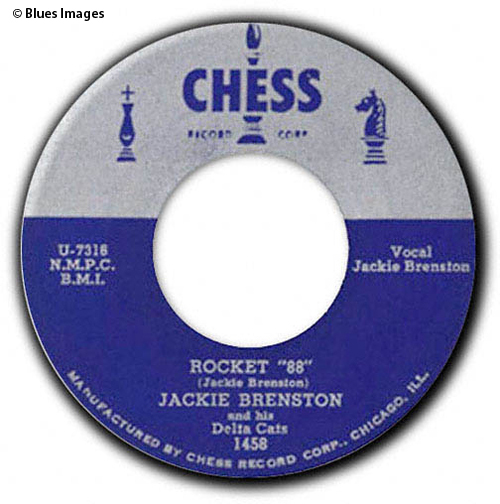
So lately everybody has gotten into the argument as to where rock and roll was born. According to The New York Times, New Jersey has now gotten into the act, with two cities declaring that rock began when Bill Haley and his band played there. The argument has devolved into semantics with one city claiming he played there with the Comets, his rock and roll band and the other that he played with the Saddlemen, a country band that was sort of rockish anyway. New Jersey is but one of several places all laying claim to the sound, including Memphis, the Mississippi Delta, Cleveland and Philadelphia. But these warring places have one troubling and tiresome thing in common, a dogged, insistence that wherever rock and roll came from or whoever came up with it, that person simply MUST BE WHITE.
For if the person was black then it was merely R&B or race music. Or sped up 12 bar blues. One wonders where that leaves Jackie Brenston and his Delta Cats’ ‘Rocket 88,’ a record held up by no less than Sam Phillips as the first rock and roll record. Doesn’t matter that Phillips thought it was Rock and Roll, most white critics consider it R&B, a bridesmaid of rock, not the Bride. Even the Bill Haley version of Rocket 88—which has no real difference from the original—is held up by some as the first rock and roll record. Rolling Stone, in one if its most inexplicable and disappointing articles came on the side of the Elvis kiss-ass and declared that ‘That’s Alright Mama’ was the first rock and roll record, something that Elvis disputed almost twenty years before and the magazine proved wrong in its very own 50’s issue from April 1990.
This begs the question of just what a black artist has to do to be considered rock. Any black rock song made too early (Rocket 88 was released in 1951) gets classified as R&B with patronizing rock critics declaring it to be important to the formation of rock and roll, but not rock itself. What does Rocket 88 have to do to be called a rock and roll song? Sure it’s ragged 12 bar blues but so is The Beatles’ Day Tripper. If anything Rocket 88 had a kid brother’s relationship to R&B, eschewing the dirty old man double-talk of the blues for a brand new lyrical concept that was all youth, all id and as blatantly sexual as it was witty: The car metaphor. Rocket 88 did more than that. It also introduced fuzz guitar almost 20 years before it became popular and pushed the drum way to the front where the whole song seemed submissive to the beat. Even listening to it now the blatant, sexually ferocious youth of the thing says rock and roll far more than anything by Bill Haley and The Comets.
But Jackie and the Delta Cats were not white, so Rocket 88 is R&B. After all Rolling Stone says so. For rock and roll to be rock and roll it simply must have some country in it. Never mind that all these black kids came from the south, grew up on country as much as blues and some, like Ray Charles actually played in country band. Critics use country merely as a ruse so they do not have to say that for rock to be rock it must have some white in it. White meaning people, not influence. Whatever black people did was proto-rock, proto being another word for prehistoric.
This slur disguised as compliment is nothing new of course. Jazz’s greatest fans have been insulting it for decades. David Hadju once wrote that in lionizing jazz the beats popularized the myth of black creative primitivism, allowing the most open-minded white listeners to use words such as ‘effortless’ and ‘instinctual’ to define black genius. Black art was an inexplicable mystery, like voodoo or black magic. So Prince is an instinctual genius despite playing 90 instruments and composing for the Joffrey ballet, but Elvis Costello is a craftsman. Duke Ellington is a natural talent but Stravinsky is a master of “multiple compositional styles, who revolutionized orchestration.” Black art is never about craft, education, technique, or intelligence. Not even jazz. Not even Free Jazz. Not even Be-bop.
Rhapsodizing about be-bop, Allen Ginsberg gushed that the music gave him such a wild, sense of freedom that he felt that all he had to do was ‘grab a horn and blow.’ Charlie Parker could only snigger at the statement, but other jazzmen took this to considerable offence. The idea that music was of such uncultured simplicity, such accidental genius that anybody could be inspired to just do it was simply preposterous, even if Ginsberg meant no harm by saying it. The truth is nobody can just grab a horn and play be-bop. One of the most complex music forms ever created, ever single person who played be-bop in its golden era was a genius, from Charlie Parker to Thelonious Monk, Dizzy Gillespie, Miles Davis, Cannonball Aderley, and Milt Jackson, among others. For all the wild abandon that Bolero inspires, nobody ever says Ravel makes one feel like grabbing a piccolo.
There is still this sense that something is not quite believable about black brilliance; that it happens by either chance or something inexplicable. And that the talent is never a matter of intellect, but ‘baffling brilliance,’ as Kurt Loder once said about Prince. Black brilliance is either off the cuff, or accidental or so couched in primitivism that one needs only to be wild and primitive as well to tap into it. Iggy Pop certainly thought so when he did the ridiculous Africa Man, where he simply growled and screamed like an idiot because well idiocy and inspiration go hand in hand with black people. Critics seem to want to believe that rock and roll emerged fully formed from the start, but not if that means black people did it. Not if that song is Rocket 88.
This isn’t racist so much as willfully ignorant. That rock and roll could be so well developed and explosive from as far back as 1951 (if not earlier) makes the music more phenomenal not less. Perhaps critics are worried that if Rocket 88 is credited for giving rock and roll everything it needed for the subsequent 40 years that would mean that white people contributed very little. This is of course ludicrous. Subtract Elvis or Carl Perkins from rock and roll and there would be no Beatles and certainly no Led Zeppelin. It’s crucial to remember that 50’s rock and rollers boxed themselves into a corner that they could not get out of and nearly took the music with them, until the Brits and the Beach Boys found a way out. Bill Haley, Elvis, Ike Turner, Little Richard; All these artists were critical to the creation, vitality and legacy of the music. But it all began with Rocket 88, and it’s high time people stop acting like it didn’t.
Monday, July 02, 2007
Whatever Happened To Spin Magazine?


Like all rock and roll stories this starts with a band. Even in the balls and bluster world of Metal lines are drawn very deep, separating one from the other. And like every genre these days metal has its mainstream bands none of which I know or listen to and its alternative bands such as Isis, Jesu, Pelican, Converge, The Fucking Champs and Mastodon. Last year Spin magazine stunned readers when they gave Blood Mountain, the band’s new album two out of five stars and dismissed it as bad prog. The review was as brief as it was surprising given that both the mainstream and alternative press went rapturous over the record, culture tastemakers Pitchfork Media in particular giving it 8.5 out of ten. Not many issues down faux punkers Fall out Boy and Brand New both got a four star reviews and in June 2006 Beyoncé made the cover of “The Sexiest Under 25” issue. Something was changing and it wasn’t just the focus on cleavage. Was Spin turning into Blender?
Blender is the successful Maxim spin-off that caters to all the pre-hormonal boys who wished Maxim had more music. It’s very good for what it is and saying that it is cheapening the culture is not only pointless but also wrong. Trash and cash has always been newsworthy and when music gets worse Blender only gets better. The problem is that Spin magazine had made a mistake in thinking that rule also applies to them. Whatever happened to Spin Magazine? That weird post punk, post reggae, pre hip-hop, pre grunge magazine that put people like Nick Cave on their cover and called him the last rock star? That was from a time when Spin, like underground rock and roll was still a scary and sexy force, governed by no rules except its own and taking the hits (putting a free condom in an issue nearly drove them out of Business) that such fearlessness was bound to receive.
In the mid to late 80’s the sheer fearlessness of Spin was almost impossible to categorize or appreciate, and not just the pioneering AIDS Column. Spin was also the first magazine to truly dig black culture as it was happening, not after the fact—which has always been the story with the white media and rock and roll. That meant not only articles about hip-hop but stuff written in hip-hop language, with Bonz Malone’s pioneering articles, as crucial in establishing the music as Yo! MTV Raps. Like The Face in the UK, Spin covered House before Technotronic took it to the charts, Trip-hop before hairdressers bought Sneaker Pimps and even this little thing called grunge before Nirvana had a hit. In fact back when Rolling Stone dismissed Nevermind with a patronizing 3 star review Spin downright ordered its audience to buy the damn record and helped start a movement.
Around the same time Rolling Stone gave Nevermind three stars it gave new albums from U2 and Michael Jackson four and a half. By dismissing the former and lionizing the latter Rolling Stone declared allegiance to the establishment. Or had been so fat on corporate rock that it could no longer see where the music was going. Earlier in the year, their New Music issue produced such vanguard acts as Chris Isaak and Extreme. Alternative was about to explode and Rolling Stone would have none of it. The magazine even trashed crucial precursors like Jane’s Addiction’s Ritual De Lo Habitual. Maybe they didn’t see it coming, but Spin did. And maybe Jane’s was right and we do become the thing we hate because Spin is now doing the same thing, praising industry-approved bands like Fall Out Boy and routinely dismissing indie obsessions like Mastodon and Isis. When a rave review of a genuine talent happened as it did with their appraisal of Joanna Newsom’s YS, it felt left field, like and exercise in coolness, like a Rolling Stone review. There was a sense that the magazine was out of its depth, reporting about a topic on which it no longer had authority.
I remember in 1987 when Spin said Guns and Roses ‘looks like all that rock has left,’ and being thrilled and appalled by the sentence. I remember being perplexed and annoyed by their first Greatest Albums of All Time list because a James Brown live album was number one, Tom Waits’ Swordfishtrombones was either 2 or 3, Echo and the Bunnymen was in there somewhere as were Depeche Mode’s Black Celebration and George Michael’s Faith. It wasn’t only the choices that made my head spin but the writing, the reasoning why they demanded that these records be listened to. On Faith they said that Michael swung from faux prince to faux pop balladry and was so obsessed with giving pop pleasures that on ‘Hard Day,’ he warps his voice to play his own lover. Note that I can quote the article almost verbatim. I stole this issue from my friend and poured over it for months trying to figure out what kind of psychos would make a list like this and what did it mean. Then I listened to the records and the person in my mirror changed. Spin did not get me to listen to different rock and roll—it got me to listen to rock and roll differently. Rock and roll became a dark and sexy mystery where yes, George Michael’s desperate and sexually confused attempt to fake Prince was more rock and roll and real than Prince himself. Where James Brown screaming ‘take it to the bridge’ had more menace and noise than the breakdown in Whole Lotta Love played twice. Where Black Celebration and Ocean Rain played back to back summed up my eighties better than any book I could possibly write. And more than anything else where music could be mine and mine alone even as I shared it with millions and there was not a damn thing wrong with that.
Alternative music, that is. Before it became a nation and a punch line, alternative was an aberration. A subculture that was thought to exist only on college radio, but not quite a movement or a commercial force. Spin was not the first to respond to college rock but it may have been the first to find the common streak in wildly divergent styles from then obscure acts such as REM to a ubiquitous artist like Prince to something totally unpalatable like Ministry. It was the first to treat all music as baroque instead of focusing on only adolescent male virgins with big glasses and jangly guitars. By giving as much ink to Salt and Pepa as they did Slayer they dared to declare that they were one and the same thing, unified not only in their statement of purpose and their DIY creativity but also in mainstream ignorance or confusion. More than that Spin had a particular genius for pin-pointing what made these artists alternative—The propulsively gay and disco subtext of Madonna for example, or the rise of irony as the dominant aesthetic device as deployed in the film Heathers—in ways that other mags like Alternative Press simply could not understand.
Spin was also a common ground under which all the disparate strains of alternative could congregate. In that it echoed the progress of seminal bands in the late 80’s that did the same thing: Public Enemy, Pixies, Sonic Youth, NWA, Ice-T/Body Count, Jane’s Addiction, Red Hot Chili Peppers, Nine Inch Nails, Soul II Soul and Nirvana.
Gradually to some, suddenly to most, Spin and the artists they covered became things that everybody had in common, an alternative nation before MTV co-opted and killed the term. As alternative grew, Spin grew into the tastemaker and 1990 to 1994 were the best years to be alive. But it would not last, and you didn’t need to see what was left of Kurt Cobain’s splattered head to know. The genre that never was spawned too many heads, too many compromises, too many marketing efforts disguised as bands that found the look, feel and sound too easy to co-opt. By 1996 alternative was also used to describe Matchbox Twenty and Better Than Ezra. The center could no longer hold and many of alternative’s unifying elements, Jane’s Addiction, Public Enemy, Raygun magazine, Nirvana and Lollapalooza fell apart.
Today’s Spin is not Spin magazine, but Pitchfork media, the website and alternative kingmaker responsible for making it’s own stars like LCD Soundsystem, Tapes n’ Tapes and Clap Your Hands Say Yeah. Thanks to Pitchfork the young listener can see brilliance in both Dizzee Rascal and Kelly Clarkson and their reviews stand in striking, wonderful defiance of the conventional wisdom that internet age kids will never read anything long. But something is missing: the grand statement, an attempt to make rock a national, cultural discourse the way Spin did in the late 80’s and Rolling Stone did in the 70’s. An attempt to unify disparate elements without every saying that’s exactly what they are trying to do.
Counter culture and Music culture has never been more fractious, never been more in need of something with the ballsiness and insanity to bear witness and give testimony to it all. The last time this happened was the late eighties when songs like Just Got Paid went to number one and nobody knew what the hell was up with Prince who no longer seemed interested in saving us. In that universe Spin as if nobody told them not to, packed Morrissey, Metallica, Run DMC, AIDS, Rai and free condoms in one package and had the gall to stamp the whole thing, “ THIS IS ROCK AND ROLL.” Rock and roll heard differently and correctly. Without ever claiming so, Spin became the voice of the generation that would not be spoken for and it said strange things, like claiming rap was art (in hip-hop voice) that disco was as crucial as punk and that if you put Morrissey and Sinead together you might get Madonna. And yet they were never so up their alternative ass that they wouldn’t put Jon Bon Jovi on the cover.
Maybe every magazine is granted only one decade of brilliance. Esquire for the 60’s Rolling Stone for the 70’s, Sassy for the 80’s. And much of this is not Spin’s fault but rock and roll itself, which has become a passive experience, not different from watching the credits roll on a videogame. Maybe Spin should pull an Apple move and ask Bob Guccione Jr to come back. Musical chairs for the editor slot is never a good sign and there is still the magazine's continued attempts to become Blender. In trying times one can either take stock or take risks and Spin seems content on doing the former even though it remains leagues below its early 90’s heyday. Maybe Spin will realize that the mid 2G’s are not that far removed from the mid 80’s and needs somebody to make sense of it. Maybe they will see that they need Joanna Newsom and Justin Timberlake on the cover, not the Killers and that they need to stop trying to figure out what people want and have the guts to give people what they need. To stop following culture and create one. Maybe they will realize that we need 80’s Spin now more than ever.
Wednesday, June 27, 2007
This Business of Books
The great thing about having an acclaimed first book is that the quality of your rejection letters gets so much better. Having gotten used to models of politeness like that yellow “NOT FOR US” card that Soho Press took the time to mass print and send to me, it did come as a rather pleasant shock how nice some of the letters were. These were some of the most heartfelt, personable and downright gripping no thank you’s I’ve received ever since I was sixteen and thought telling this girl she could sit in my lap instead of the bus seat was hot. One publisher wrote “ I know, I know, I know that I’m making a mistake turning this down but I have to,” contradicting my belief that Publishers never had to do anything. Another could rhapsodize about her favourite major and minor characters (some of who I had never given a second thought) but still decided that her publisher would not know what to do with it. And so on it went the torrent of nice let me downs, letters that let me know that I was a very good, but ultimately too risky proposition to publish.
And here I was thinking I was a Victorian. I’m not sure what being a risky writer means. Granted my new book is almost 500 pages of Slave dialect from the nineteenth century, but does that make a book risky? Hasn’t everybody seen Roots? My let’s call it affinity for sexual and scatological explicitness is well documented but I don’t know if it’s any worse than Ulysses or The Bluest Eye or Sabbath’s Theater for that matter (not that my work is anywhere near as good). I’m beginning to think that rejection letters say more about the publisher than the book being rejected. In some cases it’s simply a matter of the wrong publishing house. And granted I’m not so stuck up my own ass that I thought I was writing the great masterpiece to end all literature, but it’s puzzling to me just how cowardly the industry can be. Puzzling because too often this cowardice is written off as good business sense.
Contrary to what others may think, I have no problem with publishers being all about the money. Publishing is after all a business, not a charity. My problem with publishing is not that these guys are too mercenary but that they are nor mercenary enough. For an industry that all about the dollars very little done makes business sense. Take for instance the dependence on blockbusters, something the industry picked up from music and movies. Given how bad the state of publishing is, the dependence on mega cash cows couldn’t make less sense. And yet every publisher does it, waiting for the breakout book that will save the industry. So 8 million is spent on Charles Frazier’s new book before anybody even read what is truly a bad novel. Here was an industry setting up expectations that nobody could have matched anyway. And yet that hasn’t stopped the hunger for the next blockbuster novel.
At the Frankfurt and London Book Fair a malaise descended on the proceedings because there was no major breakout book. None except The Raw Shark Texts that was not only hyped the year before but has yet to justify it’s enormous push (Some say it has—see comments—, but I'm not seeing Cold Mountain/Corrections/Everything is Illuminated ubiquity yet). This makes no business sense. It doesn’t surprise me that so many roads lead to BMG because this is exactly the BMG/JIVE way of doing things. Comedy rocker Mojo Nixon said almost two decades ago that instead of giving Aerosmith 80 million dollars, why not give 40 bands two million dollars, that way if three or four or ten of that 40 amount to nothing there is still a wide playground of opportunity. Or put another way were Steven Tyler to croak he wouldn’t be taking your company down with him. The publishing equivalent of that would be the midlist, but there is no such thing as that in publishing anymore, despite whatever somebody might tell you. Again in the search for the next blockbuster, basic rules of business, taken for granted in every other industry are ignored. Things like building brand loyalty, nurturing the audience, exploring untapped markets, growing with the artist and the audience—nobody does that sort of thing anymore, well next to nobody anyway. Publishers have always said that this is an unquantifiable industry and I’m inclined to agree, but some things don’t need analysis, only common sense.
Some people may say that the publishing industry has always been this way. Forty-eight houses passed on Catch 22 and the biggest novel of the 50’s was Peyton Place. But the nature of the business, the character of the business has changed. Somebody has tried to make the business quantifiable, a matter of scientific numbers and nerdy analysis and I think I know whom that is. People old enough in the music industry moan that they don’t make stars like they used to and they are right. Prince broke through with his fifth album, Bruce Springsteen his third, Madonna her second. As everybody scrambles for the next big hit, nobody nurtures talent anymore and as a result there is no artist with a solid, successful career. Publishing is not much different. And yet if you take that business model to any other enterprise; no we don’t care about nurturing talent because this one thing right here, it’s gonna be the bomb, you would have been laughed to scorn. I can’t imagine the videogame industry one of those blamed for taking away music and publishing’s money running like that. To have everything riding on one videogame to be the blockbuster that sells billions instead of nurturing ten or twenty titles so that they can all eventually make a billion each would be a ridiculously stupid idea.
And in all the publishing industry's bawling about the shrinking size of their reading audience nobody seems to be paying attention to a rather unexpected bonus. Say what you want about the Harry Potter phenomenon but the fact that it created a kid (millions rather) who would rather read an 800 page book than watch TV or play a videogame is an astounding phenomenon that should not be taken lightly. Here is an audience that's massive, young, loyal and malleable. And starting next year they will be without the one thing that pulled them together. The industry has a unique opportunity to build on an already existing audience, to do the long haul thing, to respond to the wide gaping hole left by Harry Potter's absence by keeping these readers hooked to other stories and growing as they grow. Or they can just sit by and let the audience—the first massive loyal reading audience in nearly century— splinter and ultimately disappear. My money is on the latter.
And here I was thinking I was a Victorian. I’m not sure what being a risky writer means. Granted my new book is almost 500 pages of Slave dialect from the nineteenth century, but does that make a book risky? Hasn’t everybody seen Roots? My let’s call it affinity for sexual and scatological explicitness is well documented but I don’t know if it’s any worse than Ulysses or The Bluest Eye or Sabbath’s Theater for that matter (not that my work is anywhere near as good). I’m beginning to think that rejection letters say more about the publisher than the book being rejected. In some cases it’s simply a matter of the wrong publishing house. And granted I’m not so stuck up my own ass that I thought I was writing the great masterpiece to end all literature, but it’s puzzling to me just how cowardly the industry can be. Puzzling because too often this cowardice is written off as good business sense.
Contrary to what others may think, I have no problem with publishers being all about the money. Publishing is after all a business, not a charity. My problem with publishing is not that these guys are too mercenary but that they are nor mercenary enough. For an industry that all about the dollars very little done makes business sense. Take for instance the dependence on blockbusters, something the industry picked up from music and movies. Given how bad the state of publishing is, the dependence on mega cash cows couldn’t make less sense. And yet every publisher does it, waiting for the breakout book that will save the industry. So 8 million is spent on Charles Frazier’s new book before anybody even read what is truly a bad novel. Here was an industry setting up expectations that nobody could have matched anyway. And yet that hasn’t stopped the hunger for the next blockbuster novel.
At the Frankfurt and London Book Fair a malaise descended on the proceedings because there was no major breakout book. None except The Raw Shark Texts that was not only hyped the year before but has yet to justify it’s enormous push (Some say it has—see comments—, but I'm not seeing Cold Mountain/Corrections/Everything is Illuminated ubiquity yet). This makes no business sense. It doesn’t surprise me that so many roads lead to BMG because this is exactly the BMG/JIVE way of doing things. Comedy rocker Mojo Nixon said almost two decades ago that instead of giving Aerosmith 80 million dollars, why not give 40 bands two million dollars, that way if three or four or ten of that 40 amount to nothing there is still a wide playground of opportunity. Or put another way were Steven Tyler to croak he wouldn’t be taking your company down with him. The publishing equivalent of that would be the midlist, but there is no such thing as that in publishing anymore, despite whatever somebody might tell you. Again in the search for the next blockbuster, basic rules of business, taken for granted in every other industry are ignored. Things like building brand loyalty, nurturing the audience, exploring untapped markets, growing with the artist and the audience—nobody does that sort of thing anymore, well next to nobody anyway. Publishers have always said that this is an unquantifiable industry and I’m inclined to agree, but some things don’t need analysis, only common sense.
Some people may say that the publishing industry has always been this way. Forty-eight houses passed on Catch 22 and the biggest novel of the 50’s was Peyton Place. But the nature of the business, the character of the business has changed. Somebody has tried to make the business quantifiable, a matter of scientific numbers and nerdy analysis and I think I know whom that is. People old enough in the music industry moan that they don’t make stars like they used to and they are right. Prince broke through with his fifth album, Bruce Springsteen his third, Madonna her second. As everybody scrambles for the next big hit, nobody nurtures talent anymore and as a result there is no artist with a solid, successful career. Publishing is not much different. And yet if you take that business model to any other enterprise; no we don’t care about nurturing talent because this one thing right here, it’s gonna be the bomb, you would have been laughed to scorn. I can’t imagine the videogame industry one of those blamed for taking away music and publishing’s money running like that. To have everything riding on one videogame to be the blockbuster that sells billions instead of nurturing ten or twenty titles so that they can all eventually make a billion each would be a ridiculously stupid idea.
And in all the publishing industry's bawling about the shrinking size of their reading audience nobody seems to be paying attention to a rather unexpected bonus. Say what you want about the Harry Potter phenomenon but the fact that it created a kid (millions rather) who would rather read an 800 page book than watch TV or play a videogame is an astounding phenomenon that should not be taken lightly. Here is an audience that's massive, young, loyal and malleable. And starting next year they will be without the one thing that pulled them together. The industry has a unique opportunity to build on an already existing audience, to do the long haul thing, to respond to the wide gaping hole left by Harry Potter's absence by keeping these readers hooked to other stories and growing as they grow. Or they can just sit by and let the audience—the first massive loyal reading audience in nearly century— splinter and ultimately disappear. My money is on the latter.
Wednesday, June 06, 2007
Down and Out in Fort Lauderdale Airport
It’s June 4, 2007 and I’m in terminal F of the Fort Lauderdale airport wondering which preposition to use. ‘At’ sounds right, but ‘in’ sounds more apt. I feel not just in but locked inside the Airport, delayed and trapped for several shitty reasons. And when at 7:35PM, Spirit Airlines tells me that the flight is delayed for perhaps an hour, perhaps more it’s the culmination of an evening of delays that makes me want to sob and laugh at once. I do neither, but curse under my breath while not trying to picture what my Pastor best friend would think. Instead I sit on the floor, whip out my pen and book and write this blog.
Spirit Airways left Kingston at 3:30 and landed in Fort Lauderdale at 5:30. Being one of the few Jamaicans who understand the convoluted and confused FLA customs system I went to the empty ‘Visitors’ line and was in front of a Customs Officer in seconds. I would have given my backside the proverbial pat but then the Customs Officer said, “Come with me sir,” and my heart sank. Disappointed, of course but not surprised. My trips to the local police department in every American Airport had become standard ever since I had the sparkling wisdom to study for a Creative Writing Degree in the United States. After some inexplicable bureaucratic snafu, the school forgot that I had enrolled, the INS terminated my visa and I went on the F1 warning list, sharing company with Mohammed Atta and countless other Muslim terrorists, drug dealers, and illegal aliens who were all in the country on student visas, but not in school. Since 2005 I have been through so many Airport security departments (NYPD in New York) that the officers have begun to recognize me. This never-ending third degree becomes annoying after the thirteenth time but I had long decided to roll with it, nostalgic for the days when I was merely mistaken for a drug dealer.
The first customs officer, let’s call him Alpha, told me to sit in the same room that exists in a hundred airports. The same room that makes me wonder why am I in this place with Jamaicans who look like they were deported a week ago. Jamaicans, whose only flaw may have been unsophistication and others people, usually men whose only flaw might have been that they look Arabic. I’m already bored by the procedure until I realize that this C.O., let’s call him Beta, means business.
“Marlon James?”
“That’s me.”
“You’re here quite a lot.”
“I sorta have to be. I’m a writer, New York is the center of the publishing world.”
“You’re a writer. How do you support yourself, Mr. James?”
“I have a Graphic Design Company in Jamaica.”
“Can I see your business card?”
“I only have my writer’s card. I don’t exactly search for design business here.”
“When were you last here, sir?”
“Ahhh...a week ago? I was here for six weeks. Teaching a course for Gotham Writer’s workshop.”
He then left his desk came around to search my carry-on. He flipped through my laptop, my Jamaican house keys, the Peter Godwin book I was still reading and the homework my students sent in.
“Is this a register?” he said, looking at my roll call sheet.
“You know I spoke to the State Department about this. They said if I was invited and I’m working for an honorarium it was fine. I don’t need a workers permit for that.”
“Your trip to Toronto, what was that about?”
“Which one?”
“June.”
“My brother’s wife’s funeral.... oh wait no, that was a book tour. I’ve been to Toronto twice and Vancouver once.”
“Miami in November?”
“Miami book fair.”
“You’re here an awful lot. How long are you staying this time?”
“Two weeks.”
“Can you remove your...oh you’re wearing slippers, never mind.”
“Honestly, am I going to get this every time?”
“Well sir you’re F1 visa raised a red flag and looking at this you’ve been stopped several times.”
You think? I said, but not to him.
“You’re here an awful lot and usually that means you’re not visiting, but living here, and then, you are from Jamaica.”
He finally said it. So clear from the get-go that he did not even need to finish his paragraph. A sentence with a subject that includes “Jamaica” needs no predicate—we know the rest of it by heart. Now that airports have gone back to pre 9/11 laxness my grace period was officially up. I looked up at the reflective glass and suddenly realized that were I a customs officer I’d think I was a drug dealer too. Before 9/11 customs detained me all the time. Ever since I stopped combing my hair everybody asks what band am I in, even as they pull my belt buckle to watch my jeans drop to reveal skivvies. Thank god I stopped going commando to airports. I thought wearing slippers would make things easier but that made it worse. With low-rise jeans, dreadlocks, loose shirt and hippy slippers I had molded myself in the perfect Rastafarian, Ganga smoker/dealer cliché, a patsy who needed only a “Pick Me” sign to stick out more. I had gotten lax myself. Back in my suspected drug dealer days I had always made sure to dress extra yuppie for international flights. A suit when everybody else wore jeans, something to over-compensate for streaky locks and three earrings.
So C.O. Beta began to type and did so for a very long time. I wondered what he was typing and why did he have to type this whole shit over again. I wondered if I should switch from Creative Writing to teaching American police personnel how to operate the SAVE key. I wasn’t afraid or even angry, but annoyed. And Beta was really only doing his job and he was quite nice despite the three score and 10 questions.
“Is this going to happen on my next trip, because I’ll be back in July and early August,” I say but like all the other times with all the other C.O’s, Beta had no answer. He continued typing and the asked if I’ve ever committed a crime or transported drugs. Then he asked, “What’s your religion, sir?”
“Christian...I guess,” I said, not doubting my answer but absolutely stunned by the question. By now all the passengers on the Spirit flight and a couple hundred more from other flights were gone and I was alone in customs. Even the ‘Arabs’ were gone. Beta continued to type.
“I’m here all the time on book business,” I say. “I’m coming back in July for the Harlem Book Fair.”
Beta tried to look interested. An hour passed. I thought of the Pennsylvania University that got me into this mess and the countless customs officers who kept stopping me for the same damn reason and wondered when will this supposedly first world country get to the point where local, regional and federal authorities share information so that Beta doesn’t have to type the same shit over and over. I looked at him and remembered crime scenes botched in the Bronx because the three authorities were too busy fighting over whose dick was the biggest. Why was I treated like this every time I came to the States? There’s not a single thing I have ever gotten from the United States that I’m not paying for, whether that be an education, food or Levis Jeans. I called my friend Bill and got his voicemail, knowing he would not call back. I thought of teaching another course: Accessing Voicemail 101 for Americans who do not know or cannot be bothered. Or maybe an opening a voicemail reply service since nobody ever returns messages in the US.
Then Beta stamped me. But unlike every other time I had traveled to the USA, he stamped me for one month, not six. I knew already that when (now if) I came back in July, my one month stamp would raise a brand new set of red flags and I would spend an hour or three, in an office just like this one, explaining all of this to an officer who will pretend to buy it as he types all this data over again. Beta explained that my student visa plus my frequent comings and goings had set off red flags and I agreed with him. After all, the world is brimming with fantastic nations and cities so why did I fly to New York so often? Why did I subject myself to this time and again for the nation that voted for George Bush twice? Far from disagreeing with him, Customs Office Beta gave me a mini epiphany. Maybe I do come to the States too much. I have never been to Europe, or Africa, or South America or even most of the Caribbean. Why was I coming to spend quality time with customs officers when I could be hiking through Europe or teaching English in Shanghai? I’m so going to blog this, I thought, blog being my new favourite threat, and would have whipped out my notebook had C.O. Kappa not been waiting on me.
Kappa told me good evening, too one look and sent me to the B line. The oh no Mr. suspect drug dealing illegal alien terrorist, we’re gonna check every crevice or crack including your ass crack if we feel like it line. But customs officer Kappa, who searched my bags, was actually kinda sweet. Maybe she just felt sorry for me after I told her that I was about to miss my connecting flight. Maybe she thought I was cute. Maybe she mistook me for Wyclef Jean from the Fugees. She searched quickly, smiled and sent me away but I could not move. Across the room C.O. Epsilon had a mango and things were about to get ugly. Seized from a Jamaican passenger, the mango had no choice but to be undressed and raped by the C.O. With blue gloves on he eviscerated the thing, stripping every piece of flesh until he was left with the seed. Then he snapped it open and swabbed inside. I didn’t know if I should have been insulted that he thought we’re so desperate to sell drugs or impressed that he thought we had such superior intelligence that we had already figured how to genetically engineer a mango fruit to bear a Ganga bud. Or a bomb. Thoughts of bombs led to thoughts of planes and I remembered that I have a flight to catch.
As I rushed to the gate I glanced a newspaper and saw why the Beta had asked about my religion. Three men from Trinidad and one from Guyana were arrested for hatching a plot to blow up JFK Airport. One of the Trinidadians was a sun and sea-born Muslim fundamentalist who had tried to overthrow the government before. Turned out that I had hit the trifecta after all. I was a suspected drug dealing, illegal alien terrorist. At the gate Spirit announces that the flight to New York is delayed. I feel like dropping an F-Bomb but can only laugh and the 7.25 price tag for a Pastrami sandwich in Vito’s Restaurant makes me laugh more. The plane arrives earlier than expected and as it lifts off I look around for something wooden to tap. There’s nothing but the paper on which I’m writing this blog. It will have to do. I do not reach Harlem until 2 in the morning forgetting to pay the bus fare and not giving much of a fuck. I am tired, fantastically pissed off and sporting a massive headache that I can do nothing about since only in Harlem is there no such thing as a 24 hour pharmacy. I do the best I can under the circumstances: drink super-drowsy cough syrup, put on Leonard Cohen’s Songs of Love and Hate and go to bed.
Spirit Airways left Kingston at 3:30 and landed in Fort Lauderdale at 5:30. Being one of the few Jamaicans who understand the convoluted and confused FLA customs system I went to the empty ‘Visitors’ line and was in front of a Customs Officer in seconds. I would have given my backside the proverbial pat but then the Customs Officer said, “Come with me sir,” and my heart sank. Disappointed, of course but not surprised. My trips to the local police department in every American Airport had become standard ever since I had the sparkling wisdom to study for a Creative Writing Degree in the United States. After some inexplicable bureaucratic snafu, the school forgot that I had enrolled, the INS terminated my visa and I went on the F1 warning list, sharing company with Mohammed Atta and countless other Muslim terrorists, drug dealers, and illegal aliens who were all in the country on student visas, but not in school. Since 2005 I have been through so many Airport security departments (NYPD in New York) that the officers have begun to recognize me. This never-ending third degree becomes annoying after the thirteenth time but I had long decided to roll with it, nostalgic for the days when I was merely mistaken for a drug dealer.
The first customs officer, let’s call him Alpha, told me to sit in the same room that exists in a hundred airports. The same room that makes me wonder why am I in this place with Jamaicans who look like they were deported a week ago. Jamaicans, whose only flaw may have been unsophistication and others people, usually men whose only flaw might have been that they look Arabic. I’m already bored by the procedure until I realize that this C.O., let’s call him Beta, means business.
“Marlon James?”
“That’s me.”
“You’re here quite a lot.”
“I sorta have to be. I’m a writer, New York is the center of the publishing world.”
“You’re a writer. How do you support yourself, Mr. James?”
“I have a Graphic Design Company in Jamaica.”
“Can I see your business card?”
“I only have my writer’s card. I don’t exactly search for design business here.”
“When were you last here, sir?”
“Ahhh...a week ago? I was here for six weeks. Teaching a course for Gotham Writer’s workshop.”
He then left his desk came around to search my carry-on. He flipped through my laptop, my Jamaican house keys, the Peter Godwin book I was still reading and the homework my students sent in.
“Is this a register?” he said, looking at my roll call sheet.
“You know I spoke to the State Department about this. They said if I was invited and I’m working for an honorarium it was fine. I don’t need a workers permit for that.”
“Your trip to Toronto, what was that about?”
“Which one?”
“June.”
“My brother’s wife’s funeral.... oh wait no, that was a book tour. I’ve been to Toronto twice and Vancouver once.”
“Miami in November?”
“Miami book fair.”
“You’re here an awful lot. How long are you staying this time?”
“Two weeks.”
“Can you remove your...oh you’re wearing slippers, never mind.”
“Honestly, am I going to get this every time?”
“Well sir you’re F1 visa raised a red flag and looking at this you’ve been stopped several times.”
You think? I said, but not to him.
“You’re here an awful lot and usually that means you’re not visiting, but living here, and then, you are from Jamaica.”
He finally said it. So clear from the get-go that he did not even need to finish his paragraph. A sentence with a subject that includes “Jamaica” needs no predicate—we know the rest of it by heart. Now that airports have gone back to pre 9/11 laxness my grace period was officially up. I looked up at the reflective glass and suddenly realized that were I a customs officer I’d think I was a drug dealer too. Before 9/11 customs detained me all the time. Ever since I stopped combing my hair everybody asks what band am I in, even as they pull my belt buckle to watch my jeans drop to reveal skivvies. Thank god I stopped going commando to airports. I thought wearing slippers would make things easier but that made it worse. With low-rise jeans, dreadlocks, loose shirt and hippy slippers I had molded myself in the perfect Rastafarian, Ganga smoker/dealer cliché, a patsy who needed only a “Pick Me” sign to stick out more. I had gotten lax myself. Back in my suspected drug dealer days I had always made sure to dress extra yuppie for international flights. A suit when everybody else wore jeans, something to over-compensate for streaky locks and three earrings.
So C.O. Beta began to type and did so for a very long time. I wondered what he was typing and why did he have to type this whole shit over again. I wondered if I should switch from Creative Writing to teaching American police personnel how to operate the SAVE key. I wasn’t afraid or even angry, but annoyed. And Beta was really only doing his job and he was quite nice despite the three score and 10 questions.
“Is this going to happen on my next trip, because I’ll be back in July and early August,” I say but like all the other times with all the other C.O’s, Beta had no answer. He continued typing and the asked if I’ve ever committed a crime or transported drugs. Then he asked, “What’s your religion, sir?”
“Christian...I guess,” I said, not doubting my answer but absolutely stunned by the question. By now all the passengers on the Spirit flight and a couple hundred more from other flights were gone and I was alone in customs. Even the ‘Arabs’ were gone. Beta continued to type.
“I’m here all the time on book business,” I say. “I’m coming back in July for the Harlem Book Fair.”
Beta tried to look interested. An hour passed. I thought of the Pennsylvania University that got me into this mess and the countless customs officers who kept stopping me for the same damn reason and wondered when will this supposedly first world country get to the point where local, regional and federal authorities share information so that Beta doesn’t have to type the same shit over and over. I looked at him and remembered crime scenes botched in the Bronx because the three authorities were too busy fighting over whose dick was the biggest. Why was I treated like this every time I came to the States? There’s not a single thing I have ever gotten from the United States that I’m not paying for, whether that be an education, food or Levis Jeans. I called my friend Bill and got his voicemail, knowing he would not call back. I thought of teaching another course: Accessing Voicemail 101 for Americans who do not know or cannot be bothered. Or maybe an opening a voicemail reply service since nobody ever returns messages in the US.
Then Beta stamped me. But unlike every other time I had traveled to the USA, he stamped me for one month, not six. I knew already that when (now if) I came back in July, my one month stamp would raise a brand new set of red flags and I would spend an hour or three, in an office just like this one, explaining all of this to an officer who will pretend to buy it as he types all this data over again. Beta explained that my student visa plus my frequent comings and goings had set off red flags and I agreed with him. After all, the world is brimming with fantastic nations and cities so why did I fly to New York so often? Why did I subject myself to this time and again for the nation that voted for George Bush twice? Far from disagreeing with him, Customs Office Beta gave me a mini epiphany. Maybe I do come to the States too much. I have never been to Europe, or Africa, or South America or even most of the Caribbean. Why was I coming to spend quality time with customs officers when I could be hiking through Europe or teaching English in Shanghai? I’m so going to blog this, I thought, blog being my new favourite threat, and would have whipped out my notebook had C.O. Kappa not been waiting on me.
Kappa told me good evening, too one look and sent me to the B line. The oh no Mr. suspect drug dealing illegal alien terrorist, we’re gonna check every crevice or crack including your ass crack if we feel like it line. But customs officer Kappa, who searched my bags, was actually kinda sweet. Maybe she just felt sorry for me after I told her that I was about to miss my connecting flight. Maybe she thought I was cute. Maybe she mistook me for Wyclef Jean from the Fugees. She searched quickly, smiled and sent me away but I could not move. Across the room C.O. Epsilon had a mango and things were about to get ugly. Seized from a Jamaican passenger, the mango had no choice but to be undressed and raped by the C.O. With blue gloves on he eviscerated the thing, stripping every piece of flesh until he was left with the seed. Then he snapped it open and swabbed inside. I didn’t know if I should have been insulted that he thought we’re so desperate to sell drugs or impressed that he thought we had such superior intelligence that we had already figured how to genetically engineer a mango fruit to bear a Ganga bud. Or a bomb. Thoughts of bombs led to thoughts of planes and I remembered that I have a flight to catch.
As I rushed to the gate I glanced a newspaper and saw why the Beta had asked about my religion. Three men from Trinidad and one from Guyana were arrested for hatching a plot to blow up JFK Airport. One of the Trinidadians was a sun and sea-born Muslim fundamentalist who had tried to overthrow the government before. Turned out that I had hit the trifecta after all. I was a suspected drug dealing, illegal alien terrorist. At the gate Spirit announces that the flight to New York is delayed. I feel like dropping an F-Bomb but can only laugh and the 7.25 price tag for a Pastrami sandwich in Vito’s Restaurant makes me laugh more. The plane arrives earlier than expected and as it lifts off I look around for something wooden to tap. There’s nothing but the paper on which I’m writing this blog. It will have to do. I do not reach Harlem until 2 in the morning forgetting to pay the bus fare and not giving much of a fuck. I am tired, fantastically pissed off and sporting a massive headache that I can do nothing about since only in Harlem is there no such thing as a 24 hour pharmacy. I do the best I can under the circumstances: drink super-drowsy cough syrup, put on Leonard Cohen’s Songs of Love and Hate and go to bed.
Sunday, May 27, 2007
A Good Man In Africa, Part One
Any discussion that puts Africa and money in the same sentence must eventually lead to white people. A couple days ago an African friend and I were talking about Jay Z’s recent trip to Angola. I still cannot pinpoint when it happened, but the discussion led to white people in Africa. Put an occasionally angry black man from the Diaspora in the same room as an occasionally angry black man from the continent and something is bound to explode. And exploded it did, an argument whose increasing viciousness stunned me even as I spoke. I railed on against the insult of Europeans who dismiss reparation (and I don’t mean money— England couldn’t afford it anyway), he cursed that for all their supposed humanity, DeBeers still doesn’t care about where a diamond comes from once the blood is washed off. I mentioned that I’m still waiting for DeBeers’ black board member and an African nation on UN’s Security Council. He mentioned the Belgians in the Congo and made a furious moment even more furious. I riffed on about the ludicrous comparison of Romans enslaving Britain a thousand years ago— the last time I checked, Luigi wasn’t getting any money from a Roman settlement in Sheffield, but Liverpudlians were still working in buildings built from the death and dislocation of millions of Africans. I told him how incensed I get when white and black people tell me to get over slavery even though people are still benefiting from it, 174 years later.
This led to the white man in Africa. There’s a philosophy that if you’ve lived somewhere long enough eventually it won’t matter how you got there in the first place. Funnily enough no Native American or Aborigine I know shares that universal logic. After the discussion with my African friend, which ended right before we got into the incendiary (but not very well written) Confessions of an Economic Hitman, I went home surprised and a little ashamed of myself. Maybe I should get a black hood and call myself a reverse Klansman. Then I remembered Peter Godwin’s When the Crocodile Eats The Sun and how much I did not want to buy it. Godwin is of course a fine writer and journalist, whose work I have read before. It’s a perilous task for a white man to write about Africa and writing non-fiction or even the expectedly biased memoir is still a dangerous move, fraught with causing offence at the slightest insensitivity. As a recent review in the New York Times pointed out, the age of Graham Greene may be over now that we have Zakes Mda and Moses Iwegawa, to point out his bullshit. But that’s not why I hesitated buying Peter’s book.
It’s not that I didn’t want to know him. I didn’t want to like him. We love to demonize our humans but are not too keen on humanizing our demons. Hating white people comes easy when you pull a page from their forefathers’ books. Reduce them to an archetype or caricature, Joseph Conradize them if you will and then your stereotypes can remain intact. This is not far removed from the early days of my friendship with Bill where I often dismissed him as an American®, worse a white, redneck, meathead American who simply did not get world politics. But that all changed when I got to know him or rather when he challenged me in a series of not quite civil arguments. The fact is Bill demanded and deserved to be considered a person, praised and damned on his own merits. I’m just not sure if I wanted to extend the same privilege to Peter Godwin.
I still have mixed feelings about the white man in Africa. My African friend asked me what I thought about Mugabe and even on this topic I was ambivalent. On one hand the man is clearly insane and even Bob Marley on his tour to celebrate their independence knew (long before everybody else) that something was not quite right. But on the other hand, even as Mugabe plunders white owned farms, seizes the land and drives them into disuse so that he can fatten his corrupt soldiers and civil servants and starve his own people I still find myself asking what were white people doing on the land in the first place. Where’s the deed that says they bought it? Haven’t they taken enough from Africa and aren’t they taking still? When Afrikaaners, Brits and Belgians build monsters like Mugabe, Amin, Mobutu and a couple million hutus what should they expect but the monstrous? After all these years are they white Africans or merely white people in Africa?
That depends on whom you ask. Slavery and Colonialism are incendiary topics that have not and will not lose steam because at the heart of both, whites and blacks have a profoundly different sense of time and space. White people in Africa probably consider themselves citizens of the countries of the continent; Africans of the present who should not be held to the sins of the past. Men like Godwin were born in Africa, which gives him an immediate right to call himself African, but more than that he did not commit the atrocities in the past and should not be held accountable. This is a common argument, held not only in the continent but also throughout the Diaspora. But blacks, some of us anyway see things a little differently.
The Go Between’s sensational opening sentence, “The past is a foreign country: they do things differently there,” is nevertheless the kind of sentence that could have only come from a certain kind of white man. In several African and Native American languages, there are no words for past or future. Time is liberated from its linear construct. So any point made to me by my white friend about forgetting the past is lost when he does so in the large, slavery built house that he still lives in. Where some may see past, present and future, others see continuum, where something done in 1806 has as much resonance as something done in 2007. I cannot separate myself from the past because I’m still living in it. I see it all around me. Less then twenty years ago a prominent high school in uptown Kingston had an organization called Delta that only white kids could join. The country is swarming with British, American a lately Irish people some of whom move in to jobs that seem to spring up hundredfold every week. In the Irish case, they have (allegedly) been hiring themselves, promoting themselves, and giving themselves better cars than the senior Jamaican managers working in the same company. And with these new Massas have come new house niggers, professional Jamaicans with little experience that they have hired and inculcated into their office culture before they could learn any other. And then there are the not so professional house niggers, women mostly who pretend they always loved U2 as they are getting fucked, pun intended by Irish men. Jamaican frogs swimming in a tub put to boil, with no idea that they are being cooked to death.
I find the idea of Godwin’s memoir strange because I have always thought the most convenient trait of the white man in Africa and the Diaspora is his short memory. We however, cannot forget: slavery, Liverpool, the Gold Coast, how the Maroons betrayed us, Toussaint, colonialism, blood diamonds, Sharpeville, the Congo Free State, King Leopold, King Solomon’s Mines, Sam Sharpe, Tacky and Boukman, Tarzan, Heart of Darkness, Mau Mau, Kwame Nkruma, Patrice Lumumba, the Mississippi three, the Little Rock nine, the four little black girls of Birmingham, Caribbean immigrants and black Americans who fought for the allies in two world wars only to be treated worse than people that lost, Percy Julian in heaven waiting on his Nobel Prize, Walter Rodney, Angela Davis and CIA station chief Larry Devlin. All these events have all happened, are happening and will happen again. They are like dead parents and unborn children, as real to us as the living.
I thought that maybe my anger would blind me to Peter’s humanity. The Godwins may have been after all, good people trying to live, making a home where they had hung their hat. But a part of me will always see them as interlopers and if they did not risk anything to make Africans’ lives better then they were silent participants in making it worse. Why should I care about another story that tries to make the white experience in Africa compelling? What kind of sons of bitches simply take over a country and then renames it Rhodesia? The idea of asking blacks to simply forget the past is as ludicrous as buying a Native American a beer, slapping him on the back and saying ‘no hard feelings, buddy.’
But that doesn’t make him racist of course. After all, back in Jamaica many of these newly arrived whites have black friends. It’s hard not to notice these Negroes at their parties and weddings, since there are only four of them. Well, two— the other two are merely dustbins for expatriate cock, whether that be the new commissioner of police or the latest dispatch to Digicel. I gaze out my window and my window to Africa and though I’m looking at 2007 I’m seeing 1807. So you can imagine the anger I carried with me when I bought Peter Godwin’s When A Crocodile Eats the Sun.
But then I read the book.
This led to the white man in Africa. There’s a philosophy that if you’ve lived somewhere long enough eventually it won’t matter how you got there in the first place. Funnily enough no Native American or Aborigine I know shares that universal logic. After the discussion with my African friend, which ended right before we got into the incendiary (but not very well written) Confessions of an Economic Hitman, I went home surprised and a little ashamed of myself. Maybe I should get a black hood and call myself a reverse Klansman. Then I remembered Peter Godwin’s When the Crocodile Eats The Sun and how much I did not want to buy it. Godwin is of course a fine writer and journalist, whose work I have read before. It’s a perilous task for a white man to write about Africa and writing non-fiction or even the expectedly biased memoir is still a dangerous move, fraught with causing offence at the slightest insensitivity. As a recent review in the New York Times pointed out, the age of Graham Greene may be over now that we have Zakes Mda and Moses Iwegawa, to point out his bullshit. But that’s not why I hesitated buying Peter’s book.
It’s not that I didn’t want to know him. I didn’t want to like him. We love to demonize our humans but are not too keen on humanizing our demons. Hating white people comes easy when you pull a page from their forefathers’ books. Reduce them to an archetype or caricature, Joseph Conradize them if you will and then your stereotypes can remain intact. This is not far removed from the early days of my friendship with Bill where I often dismissed him as an American®, worse a white, redneck, meathead American who simply did not get world politics. But that all changed when I got to know him or rather when he challenged me in a series of not quite civil arguments. The fact is Bill demanded and deserved to be considered a person, praised and damned on his own merits. I’m just not sure if I wanted to extend the same privilege to Peter Godwin.
I still have mixed feelings about the white man in Africa. My African friend asked me what I thought about Mugabe and even on this topic I was ambivalent. On one hand the man is clearly insane and even Bob Marley on his tour to celebrate their independence knew (long before everybody else) that something was not quite right. But on the other hand, even as Mugabe plunders white owned farms, seizes the land and drives them into disuse so that he can fatten his corrupt soldiers and civil servants and starve his own people I still find myself asking what were white people doing on the land in the first place. Where’s the deed that says they bought it? Haven’t they taken enough from Africa and aren’t they taking still? When Afrikaaners, Brits and Belgians build monsters like Mugabe, Amin, Mobutu and a couple million hutus what should they expect but the monstrous? After all these years are they white Africans or merely white people in Africa?
That depends on whom you ask. Slavery and Colonialism are incendiary topics that have not and will not lose steam because at the heart of both, whites and blacks have a profoundly different sense of time and space. White people in Africa probably consider themselves citizens of the countries of the continent; Africans of the present who should not be held to the sins of the past. Men like Godwin were born in Africa, which gives him an immediate right to call himself African, but more than that he did not commit the atrocities in the past and should not be held accountable. This is a common argument, held not only in the continent but also throughout the Diaspora. But blacks, some of us anyway see things a little differently.
The Go Between’s sensational opening sentence, “The past is a foreign country: they do things differently there,” is nevertheless the kind of sentence that could have only come from a certain kind of white man. In several African and Native American languages, there are no words for past or future. Time is liberated from its linear construct. So any point made to me by my white friend about forgetting the past is lost when he does so in the large, slavery built house that he still lives in. Where some may see past, present and future, others see continuum, where something done in 1806 has as much resonance as something done in 2007. I cannot separate myself from the past because I’m still living in it. I see it all around me. Less then twenty years ago a prominent high school in uptown Kingston had an organization called Delta that only white kids could join. The country is swarming with British, American a lately Irish people some of whom move in to jobs that seem to spring up hundredfold every week. In the Irish case, they have (allegedly) been hiring themselves, promoting themselves, and giving themselves better cars than the senior Jamaican managers working in the same company. And with these new Massas have come new house niggers, professional Jamaicans with little experience that they have hired and inculcated into their office culture before they could learn any other. And then there are the not so professional house niggers, women mostly who pretend they always loved U2 as they are getting fucked, pun intended by Irish men. Jamaican frogs swimming in a tub put to boil, with no idea that they are being cooked to death.
I find the idea of Godwin’s memoir strange because I have always thought the most convenient trait of the white man in Africa and the Diaspora is his short memory. We however, cannot forget: slavery, Liverpool, the Gold Coast, how the Maroons betrayed us, Toussaint, colonialism, blood diamonds, Sharpeville, the Congo Free State, King Leopold, King Solomon’s Mines, Sam Sharpe, Tacky and Boukman, Tarzan, Heart of Darkness, Mau Mau, Kwame Nkruma, Patrice Lumumba, the Mississippi three, the Little Rock nine, the four little black girls of Birmingham, Caribbean immigrants and black Americans who fought for the allies in two world wars only to be treated worse than people that lost, Percy Julian in heaven waiting on his Nobel Prize, Walter Rodney, Angela Davis and CIA station chief Larry Devlin. All these events have all happened, are happening and will happen again. They are like dead parents and unborn children, as real to us as the living.
I thought that maybe my anger would blind me to Peter’s humanity. The Godwins may have been after all, good people trying to live, making a home where they had hung their hat. But a part of me will always see them as interlopers and if they did not risk anything to make Africans’ lives better then they were silent participants in making it worse. Why should I care about another story that tries to make the white experience in Africa compelling? What kind of sons of bitches simply take over a country and then renames it Rhodesia? The idea of asking blacks to simply forget the past is as ludicrous as buying a Native American a beer, slapping him on the back and saying ‘no hard feelings, buddy.’
But that doesn’t make him racist of course. After all, back in Jamaica many of these newly arrived whites have black friends. It’s hard not to notice these Negroes at their parties and weddings, since there are only four of them. Well, two— the other two are merely dustbins for expatriate cock, whether that be the new commissioner of police or the latest dispatch to Digicel. I gaze out my window and my window to Africa and though I’m looking at 2007 I’m seeing 1807. So you can imagine the anger I carried with me when I bought Peter Godwin’s When A Crocodile Eats the Sun.
But then I read the book.
Thursday, May 10, 2007
Bedside Books
I’m beginning to understand what life must be like for people involved with writers. Readers may not be so bad because a book by the bedside may simply mean a chapter or two before sleep, sex or slex. But bedside books are a warning if your lover is a writer. Not only is he cheating on you with Collette, Miguel Cervantes and a pervert like Henry Miller, but he’s taking them to bed for an ink-stained orgy. He has already found the love of his life and she’s older than sin (or younger than a preteen), smells like dust and may have a horrible case of the bookworms.
Well rest easy potential future bedmates, for it turns out I can’t commit to books either. The problem is that ever since my first novel came out I’m rarely home more than five months a year so bed is wherever I’m crashing at the moment. Right now it’s in Harlem’s historic district, right across from the Morris Jumel Mansion, where George Washington lived, in a brownstone that Louis Armstrong or/and Malcolm X used to live in. With ghosts like these sharing my space I had to raise the standard of the books nearby.
At this bedside most of the books are new because well, I buy books like some people buy meth and even on this trip, an “I’m only here to teach, not buy” trip I’ve already racked up 27 books. Nearest to my bedside (shall I describe the bed?) is Zbigniew Herbert’s Collected Poems 1956-1998. I have never in my life heard of Zbigniew Herbert, nor have I ever in my life bought a book of poetry. But Herbert’s book was one of the most stunning covers I’ve seen in a long time and as an occasional practicing Graphic Designer, I do buy books based on the cover. Worse than that, I redesign covers I don’t like (Toni Morrison’s Beloved and Orham Pamuk’s Istanbul come to mind). I had no intention of actually reading the thing until I came upon this:
People ran to the shelters
He said his wife had hair
In whose depths one could hide
Now I can neither go to bed nor leave it without reading Herbert first.
Below Herbert and suffering from my unfair attention span is Michael Chabon’s new novel, The Yiddish Policemen’s Union. Michiko Kakutani loves it and she usually hates everything, so now I’m wondering if there’s something wrong with the novel. I believe that if you spend too much time looking for bad, you forget what’s good, but that’s just me. Below that, Andrew Hussey’s Paris the Secret History, the latest in my rather recent but still quite overpowering non-fiction fetish. My big dream literary project is, funnily enough a non-fiction book about the first 500 years of Kingston. Who knows when that’s going to happen. Below that, fire breathing novelist Daniel Alarcon’s Lost City Radio. Alarcon, easily the star of the recent PEN Conference has penned a novel that would have made Roberto Bolaño very jealous or very proud.
Speaking of Bolaño, that’s him at the foot of the bed with three of his best: By Night in Chile, A Distant Star, and his masterpiece, The Savage Detectives. I think I’ve finally cured my addiction to magical realism. No surprise, Bolano was a sworn enemy of M.R. to the point of eviscerating Marquez in the press, and combating Isabel Allénde to the point where she cursed his corpse. He and his friends also had the habit of interrupting establishment poets by screaming poetry of their own. Of course he’s near my bed, hell if it weren’t for potentially unsightly paper cuts, I’d sleep with the book.
As for the rest:
Rolling Stone’s 40th Anniversary issue. Interesting set of interviews about rock and roll past, present and future. And an uncanny past and present and future it is given that not a single interviewee is black. Granted this is the same magazine that recently joined the tired and easily unproven “Rock and Roll started with Elvis” bandwagon a few years back so this oversight, while unsurprising still sucks major ass.
A stack of New Yorkers, some of which I’ve read cover to cover! I’m proud of myself.
—Robertson Davies’, Deptford Trilogy, which my friend Bill raved about so much that I bought six of his books. Turns out the bastard never even finished one.
—Junot Diaz’s The Brief Life of Oscar Wao (Galley). Some people have been waiting for this novel like the second coming of Christ. I know, I know, it helps having really good friends, so don’t hate, haters.
—Don Delillo’s Falling Man, Ian McEwan’s Saturday, Helen Schulman’s A Day At The Beach, Ken Kalfus’ A Disorder Peculiar To The Country, Jess Walter’s The Zero, Frédéric Beigbeder’s Windows On The World, Claire Messud’s The Emperor’s Children, Moshin Hamid’s The Reluctant Fundamentalist and Jonathan Safran Foer’s Extremely Loud and Incredibly close. This fall I’m teaching a lit course on 9/11 And The Novel so I’m surrounded by books on or inspired by this still surreal event. I have a feeling that Richard Flanagan’s The Unknown Terrorist might be the best (Kakutani calls it “stunning”). Lord knows John Updike’s Terrorist is the worst. If you have a suggestion please leave a comment.
— Andre Aciman’s Call me by Your Name and Allan Hollinghurst’s The line of Beauty. I’m now convinced that unless the guy or girl is Latino, only gay guys can write sex that’s actually sexy. I don’t care who’s getting busy, as long as I never have to read another sex scene from Updike.
—Margaret Atwood’s The Handmaids Tale (!!!) in hardcover (!!!!!!!). Don’t hate, haters.
—Robert Fagles’ translation of The Aenid, which I might never actually read, but it does look rather fetching beside my translation of The Odyssey, which I have read.
—Don Delillo’s Libra, because I’m finishing an ‘interim’ novel about Jamaican politics and need to find a better way to structure it. This may be the most cleverly plotted novel about an actual event that I have ever read.
—Phillip Roth’s The Human Stain and The Professor of Desire. I’ve been hating on Roth for no other reason than the unconditional love he gets from critics. I dismissed him as one of those American artists, like Bruce Springsteen that only Americans understood. Or rather I’ve hated him for the sole reason that he’s loved and now I’d like to think that at 36 I’m finally shedding that last remnant of artistic immaturity that young people mistake for irony. You should see how many Roth novels are in my Strandbook.com shopping cart. Maybe it’s time to give Darkness On The Edge Of Town a good listen.
—Richard Hawkins’ The God Delusion, as funny as the hell he’s clearly on his way to.
—Salman Rushdie’s The Satanic Verses, just because.
—Daniel Mendelsohn’s The Lost: A Search for Six of the Six Million, a book about one man’s search for his family that perished in the holocaust that wins your heart then breaks it, over and over again.
—Mary Gaitskill’s Veronica. I’ll confess it, I don’t read many women novelists and those women tend to be Gaitskill, Susannah Moore, Zadie Smith, Edwidge Danticat, Jeanette Winterson, Francine Prose or dead. I like novels on a grand scale and have very little use for books with a small, intimate focus. That means neither of the Annes, Tyler or Beattie. Ever. Gaitskill is fearless in a way the writers are just simply not, not anymore.
—Jeanette Winterson’s The Weight, Alexander McCall Smith’s Dream Angus and Victor Pelevin’s The Helmet of Horror. I’m fascinated by Canongates’s Myth’s Series. I’d love to write one but Canongate thought my first novel was slow and boring so I doubt that I’m on their wish list.
—Tony Judt’s remarkable Post War and Roger Osborne’s Civilization, which chronicles the history of the west in a remarkable 500 pages. Such a good read that I overlooked that this was yet another book insisting that western civilization was all the mattered, despite the fact that for a good 2000 years ‘western civilization’ was an oxymoron.
And yet this is only about half of the books I have strewn on, beside or within the periphery of my bed. This might also explain why there’s no other human sleeping in it.
Well rest easy potential future bedmates, for it turns out I can’t commit to books either. The problem is that ever since my first novel came out I’m rarely home more than five months a year so bed is wherever I’m crashing at the moment. Right now it’s in Harlem’s historic district, right across from the Morris Jumel Mansion, where George Washington lived, in a brownstone that Louis Armstrong or/and Malcolm X used to live in. With ghosts like these sharing my space I had to raise the standard of the books nearby.
At this bedside most of the books are new because well, I buy books like some people buy meth and even on this trip, an “I’m only here to teach, not buy” trip I’ve already racked up 27 books. Nearest to my bedside (shall I describe the bed?) is Zbigniew Herbert’s Collected Poems 1956-1998. I have never in my life heard of Zbigniew Herbert, nor have I ever in my life bought a book of poetry. But Herbert’s book was one of the most stunning covers I’ve seen in a long time and as an occasional practicing Graphic Designer, I do buy books based on the cover. Worse than that, I redesign covers I don’t like (Toni Morrison’s Beloved and Orham Pamuk’s Istanbul come to mind). I had no intention of actually reading the thing until I came upon this:
People ran to the shelters
He said his wife had hair
In whose depths one could hide
Now I can neither go to bed nor leave it without reading Herbert first.
Below Herbert and suffering from my unfair attention span is Michael Chabon’s new novel, The Yiddish Policemen’s Union. Michiko Kakutani loves it and she usually hates everything, so now I’m wondering if there’s something wrong with the novel. I believe that if you spend too much time looking for bad, you forget what’s good, but that’s just me. Below that, Andrew Hussey’s Paris the Secret History, the latest in my rather recent but still quite overpowering non-fiction fetish. My big dream literary project is, funnily enough a non-fiction book about the first 500 years of Kingston. Who knows when that’s going to happen. Below that, fire breathing novelist Daniel Alarcon’s Lost City Radio. Alarcon, easily the star of the recent PEN Conference has penned a novel that would have made Roberto Bolaño very jealous or very proud.
Speaking of Bolaño, that’s him at the foot of the bed with three of his best: By Night in Chile, A Distant Star, and his masterpiece, The Savage Detectives. I think I’ve finally cured my addiction to magical realism. No surprise, Bolano was a sworn enemy of M.R. to the point of eviscerating Marquez in the press, and combating Isabel Allénde to the point where she cursed his corpse. He and his friends also had the habit of interrupting establishment poets by screaming poetry of their own. Of course he’s near my bed, hell if it weren’t for potentially unsightly paper cuts, I’d sleep with the book.
As for the rest:
Rolling Stone’s 40th Anniversary issue. Interesting set of interviews about rock and roll past, present and future. And an uncanny past and present and future it is given that not a single interviewee is black. Granted this is the same magazine that recently joined the tired and easily unproven “Rock and Roll started with Elvis” bandwagon a few years back so this oversight, while unsurprising still sucks major ass.
A stack of New Yorkers, some of which I’ve read cover to cover! I’m proud of myself.
—Robertson Davies’, Deptford Trilogy, which my friend Bill raved about so much that I bought six of his books. Turns out the bastard never even finished one.
—Junot Diaz’s The Brief Life of Oscar Wao (Galley). Some people have been waiting for this novel like the second coming of Christ. I know, I know, it helps having really good friends, so don’t hate, haters.
—Don Delillo’s Falling Man, Ian McEwan’s Saturday, Helen Schulman’s A Day At The Beach, Ken Kalfus’ A Disorder Peculiar To The Country, Jess Walter’s The Zero, Frédéric Beigbeder’s Windows On The World, Claire Messud’s The Emperor’s Children, Moshin Hamid’s The Reluctant Fundamentalist and Jonathan Safran Foer’s Extremely Loud and Incredibly close. This fall I’m teaching a lit course on 9/11 And The Novel so I’m surrounded by books on or inspired by this still surreal event. I have a feeling that Richard Flanagan’s The Unknown Terrorist might be the best (Kakutani calls it “stunning”). Lord knows John Updike’s Terrorist is the worst. If you have a suggestion please leave a comment.
— Andre Aciman’s Call me by Your Name and Allan Hollinghurst’s The line of Beauty. I’m now convinced that unless the guy or girl is Latino, only gay guys can write sex that’s actually sexy. I don’t care who’s getting busy, as long as I never have to read another sex scene from Updike.
—Margaret Atwood’s The Handmaids Tale (!!!) in hardcover (!!!!!!!). Don’t hate, haters.
—Robert Fagles’ translation of The Aenid, which I might never actually read, but it does look rather fetching beside my translation of The Odyssey, which I have read.
—Don Delillo’s Libra, because I’m finishing an ‘interim’ novel about Jamaican politics and need to find a better way to structure it. This may be the most cleverly plotted novel about an actual event that I have ever read.
—Phillip Roth’s The Human Stain and The Professor of Desire. I’ve been hating on Roth for no other reason than the unconditional love he gets from critics. I dismissed him as one of those American artists, like Bruce Springsteen that only Americans understood. Or rather I’ve hated him for the sole reason that he’s loved and now I’d like to think that at 36 I’m finally shedding that last remnant of artistic immaturity that young people mistake for irony. You should see how many Roth novels are in my Strandbook.com shopping cart. Maybe it’s time to give Darkness On The Edge Of Town a good listen.
—Richard Hawkins’ The God Delusion, as funny as the hell he’s clearly on his way to.
—Salman Rushdie’s The Satanic Verses, just because.
—Daniel Mendelsohn’s The Lost: A Search for Six of the Six Million, a book about one man’s search for his family that perished in the holocaust that wins your heart then breaks it, over and over again.
—Mary Gaitskill’s Veronica. I’ll confess it, I don’t read many women novelists and those women tend to be Gaitskill, Susannah Moore, Zadie Smith, Edwidge Danticat, Jeanette Winterson, Francine Prose or dead. I like novels on a grand scale and have very little use for books with a small, intimate focus. That means neither of the Annes, Tyler or Beattie. Ever. Gaitskill is fearless in a way the writers are just simply not, not anymore.
—Jeanette Winterson’s The Weight, Alexander McCall Smith’s Dream Angus and Victor Pelevin’s The Helmet of Horror. I’m fascinated by Canongates’s Myth’s Series. I’d love to write one but Canongate thought my first novel was slow and boring so I doubt that I’m on their wish list.
—Tony Judt’s remarkable Post War and Roger Osborne’s Civilization, which chronicles the history of the west in a remarkable 500 pages. Such a good read that I overlooked that this was yet another book insisting that western civilization was all the mattered, despite the fact that for a good 2000 years ‘western civilization’ was an oxymoron.
And yet this is only about half of the books I have strewn on, beside or within the periphery of my bed. This might also explain why there’s no other human sleeping in it.
Monday, April 30, 2007
On Meeting Salman Rushdie
 For most of last week I was at the PEN conference in New York. I missed last year’s because I was in Los Angeles losing the Los Angeles Times Book Award for Best First Work of Fiction to Uzodimna Iweala’s Beasts Of No Nation. This year’s theme was Home and Away and I made sure to go for many reasons, not the least being that ‘home and away’ defines my very existence. At home my wish to be away comes down on me like a sickness. Away, where I can convert home into a concept instead of a place, I miss the idea of Jamaica only to go home and be confronted with the reality of Jamaican life and pine yet again for being away.
Anyway I’m at this PEN Conference and the one set of people you cannot get away from are writers. Around writers I cease being a writer and I hate it. I become a speechless, awkward fan and try to stay as far away from them as possible. Especially if I idolize the writer. In some alternative universe I’m being dismissed by some of those writers as the aloof snob with dreadlocks who hovers in and out of readings and never talks to people, when I truth I’m just a fan who has gotten drunk on their work in the past and fear that in meeting them I will blow it and come across as the same gushing, guffawing nerd that nobody likes.
On 12th Street I literally ran into the always nice and graceful Francine Prose who gave me a big hug to which my response was to re-introduce myself again, “Hi I’m Marlon James, we met at Miami Book Fair,” which was a pretty stupid thing to say to a person hugging me. She was trying to find Nadine Gordimer who was going hog wild over New York City in a taxi and I tried not be wowed by the remark as if, of course, that crazy South African, you know how our Nadine is. But there, right in front of NYU’s Tishman Auditorium I saw Salman Rushdie for the second time.
I had seen him that Friday evening waiting outside for a panel discussion between Vikram Chandra and Kiran Desai and it was as if some deity had come in the room to deign us with his brief presence. Mark from The Elegant Variation then told me how he had met him not long after 9/11 (at a restaurant or museum I think) and Rushdie and his wife invited him over. Or rather how he was too chickenshit to introduce himself and his girlfriend bellowed, as girlfriends sometimes do, that Mark was his biggest fan but was too shy to come over and introduce himself. In that split second, sitting in that theatre with Rushdie ten or so rows ahead of me, I realized what girlfriends are for: to be the man that men sometimes aren’t man enough to be. But then I met Maud Newton, writer of the best literary blog in America and the woman behind at least 50% of the new traffic to my blog and was kinda starstruck again. I looked down ten rows for that bushy balding head and he was gone.
Most of the writers I’ve met have been very nice. At the “Granta’s Best Young American Novelists,” panel I met a few. Gary Shteyngart, author of 2006’s best novel, Absurdistan, was a riot. He was every bit as funny as his book and me, unable to stop the torrent of fanboy mania once I started told him that I wrote a blog about him and that his was the kind of book that makes me want to write books. He asked if I was a writer and I told him that I was nominated for an award along with Uzodimna and Olga Grushin who were both on the panel. He wrote down the name of my book, which I thought was really nice and even if it wasn’t sincere it doesn’t matter in the least. I think authors, even the greatest and finest are still genuinely happy to meet people who get their work and most seemed to be impressed if not stunned by somebody in a Jamaican accent talking to them about their book. Alas Rushdie was clear across town at another panel.
But there he was again on Saturday afternoon, in front of Tishman’s Auditorium and by himself. By himself, he is by himself, I thought. People were talking to him but he was mostly alone, lingering outside the theatre like everybody else, a fan of literature waiting for an event to start. He was literally in my way; to get inside I would have had to either give him a wide berth and say excuse me. Of course nobody says excuse me to Salman Rushdie. I have no idea how this works when you encounter famous people. If you make a big deal then you might give them the exact public awkwardness they probably despise, but if you act as if they don’t matter then it seems almost like reverse snobbery or colossal ignorance, as if the person is irrelevant even if you are at an event where he is clearly the focus. Not that the event was about him, but as the Chairman of PEN, an organization of which I am a member, to act as if I don’t know who he is would have been disingenuous, not mentioned awfully unsubtle.
Them Mark hailed me from down the street and I felt both relief at being called out of this dilemma and saddened that I’m really not going to meet this guy. If you’re never read this blog then you don’t know that Salman Rushdie is by and large the writer who made me want to write the books. In 1999, I had finished my first novel, all 400 pages of it when I read Rushdie’s Shame and promptly destroyed my manuscript. That wasn’t a book, is said pointing at my manuscript. This is a book! I said clutching his. I remember reading it in church and people being so disturbed by my outbursts of laughter that they thought I was possessed (I had the book hidden in a bible). Rushdie exploded my conception of what a novelist could write, how he should write and what he could say. And who knows, maybe this is all stuff that he might have enjoyed hearing, even though lord knows Rushdie does not need affirmation from some indie novelist who has only written one book.
There’s something else. Like any other big fan of an artist’s work, I dread meeting Rushdie because it might ruin my image of him. Most of the writers I’ve met are nice and some have become really good friends but there is still this crushing fear that maybe my hero is an asshole, which will all but ruin my hero worship or worse turn me into those emotionally removed but still pathetic former fans who demur that “ I still think he’s a great writer,” to mask genuine hurt. Like any fan I think I need my heroes to be heroic and not real people, and instead of knowing him to be a jerk I’d rather not know him at all. As Mark and I took our seats, I looked around for the balding head or the glasses shielding those eyes that always look as if he knows something you don’t. But he was gone.
Tuesday, April 17, 2007
Am I A Book Snob?

This is Miss Leyow’s fault. 1985, way back in our first lit class, she warned me that if I were to really get a hold of literature, get into the magic and wonder of books, it would change everything about how I see the world—for better or worse. That was both promise and warning, something exciting yet ominous. Twenty-two years later, somewhere between stealing from Borges and shouting in envy at Bolano I realized that I just might be a book snob. This terrible secret I had long suspected and kept to myself, fearing the repercussions of being seen as an elitist, which can be a double curse for a black man; worse a Black Man in America ®. Recent debates in black American fiction have made it even worse, with clear battle lines being drawn between commercial and literary fiction as the former fights for inclusion and the latter for higher standards. It means much when self-published author Shamontiel’s most withering criticism of Mat Johnson (Author of The Great Negro Plot) was that he was ‘elitist.’ So many writers, black and white respond to this with insincere pluralism as if, of course War and Peace and Peyton place belong on the shelf together, right beside Danielle Steele and Toni Morrison. I knew because I used to be in their number. Then I reached 36.
Nothing sharpens your focus like age. I’m now at the age where I’m neither cool nor dead and am four years from my first prostate exam. This does many things to man including reducing his tolerance for bullshit. This is a roundabout way of saying that far from hiding my book snobbery I am quite proud of it. Snob, like nigger and bitch are words that were once bestowed on others as an insult. I feel like becoming a rapper and claim the insult for myself, except snob just does not have the poetic ring or the exciting sense of the forbidden. But that’s the word that I have been given.
The irony about us book snobs is that our tastes are far more inclusive than those of the people who criticize us. I have been calling Buffy the Vampire Slayer the last great work of the 20th century for years now, but people who watch the Lifetime Movie Network tell me to grow up. And put away my X-Men comics while I’m at it. And yet for all our supposed hatred of mainstream and genre fiction, it is us, not them who have been championing Walter Moseley and George Pellecanos for years. It is us who have kept Ice Berg Slim and Zora Neale Hurston alive. It’s us that realized that Georges Simenon was onto something and Mickey Spillane was not, despite the former selling far more than the latter. The only thing we hate is literature that insults our intelligence, whether that is Omar Tyree or Elfriede Jenilek. For some people (who have never heard of Jenilek), that’s enough to call one a snob.
This calls to mind my previous blog about highbrow and lowbrow lit. In that blog I was more diplomatic, trying on terms for size and refusing to claim any. This blog is different. I just don’t see why I should apologise for reading Stendhal and wanting to talk about it. This coming September I might even teach a class on The Charterhouse of Parma. I don’t see why I should hide that reading Steppenwolf scared the daylights out of me because I came across an irrefutable argument for suicide. Or that I know my Faulkner from my Welty. And that yes, the new translation of Roberto Bolano’s the Savage detectives has me going from one delirious peak to the next, like those orgasms that men don’t get to have. The difference is that I don’t hide it anymore to defend Eric Jerome Dickey.
There are reasons against snobbery of course, but it wasn’t until my 36th birthday that I realized that they were bullshit. To defend a black writer merely because he was black was and is still ludicrous, something that our forbears Richard Wright and James Baldwin never stood for even when there weren’t many black writers around and any writing was better than nothing. There must be something deeper at work. Something else perhaps, not in necessarily in all book elitists but in myself that forced me into the book snob closet. Then I remembered. Like most screwed up things in my life I got that from school.
I remember once, talking to a neighbour about dimming myself down in school. She was appalled to hear this, but my good friend Danielle backed me up because she had done the same. Dimming down works like this: in order to win more school friends and influence people, I set my brain on dim, acted less intelligent than I was. This saved me from the wretched nerd category, which in high school was the worst kind of loser. But I found myself dimming even when I got to work, where displays of intelligence were simply uncool, unmanly, and just plain wrong. I came across people who were quite proud of never reading a book. And never planning to. I went to a church that lauded the barely literate believer, proclaiming that it’s better to have a G.O.D. than and Ph.D. I came across college educated men who thought a lack of cooking skills made them straight and women who saw no problem with acting stupid to get a man. In short I came see that using one’s brain and appearing to do so was simply not done. And it made no difference if you were a writer.
This is compounded in the black community where criticism of another writer is seen as not just an attack, but also a declaration that the critic is calling himself better than the writer. Not a better writer mind you, but a better human being, a more valuable one, a snob. It makes no sense trying to get these writers to see otherwise. They will go to their graves not understanding the difference between critique and attack and will in turn attack you personally. But who is being the snob? My criticism of commercial fiction never extends to the writer, but their criticism of people like me often does. Am I a snob because I know that Marquez’s One Hundred Years of Solitude proved that John Barth’s 1966 essay on The Death of Narrative was hogwash? Should I have kept that to myself? How about my annoying habit of sticking to the Pevear-Volokhonsky translations of Tolstoy and Dostoevsky because Brits tend to treat those guys like Victorians? Is this snobbish enough yet? How about me going four paragraphs without mentioning a black writer?
I’m just not sure what literary pandering achieves. I was reading Flaubert at seventeen, so why would I read Tom Clancy at 36? Why regress? No pianist goes from Schubert to Chopsticks. Nobody grows from adult to infant. Why is this regression cool? Why is a discriminating taste uncool? Literature is the only art form where the mere attempt to do it is supposed to confer legitimacy, not whether it is done well. New York City ballet is not hiring baton twirlers and the twirlers are remarkably non-plussed about it. So what’s so bad about having a summit of writers and not inviting Tyler Perry?
Maybe Snob, like nerd or fag is a way of quickly dismissing someone we do not understand. People still think I read these mountains of boring books for no reason than to appear smarter than everybody else. They cannot imagine that maybe I read Beckett’s novels because I actually enjoy them. Because they cannot enjoy or will never try reading these books they assume that no normal person would either and anybody who claims otherwise is either faking it or elitist. They think we wear black turtlenecks in summer, sip chamomile tea with our pinkies stuck out, speak of metaphysics then talk down to all commercial and self published lit. And yet the last time I ran into a fellow book snob we were gushing over some old issues of X-Men, which many commercial fiction writers consider beneath them. This is bullshit of the worst smelling order.
And what’s the opposite of a book snob, a book ho? Do you really see no difference between Erica Kennedy’s Bling and Zadie Smith’s On Beauty? Do you really think calling Smith a superior writer is an attempt to be snobbish? Well then so be it. If you are a book snob it’s time to come out of the closet. You might not think you are, but if you bought Pete Dexter instead of Tom Clancy, Junot Diaz instead of Jackie Collins, then you are a lit snob my friend. It makes no sense denying it anymore. You might as well take off those shades as you buy The New York Review of Books, or try to slip the Paris Review underneath that In Touch. I’m starting to like my book snobbery. I like not having my time wasted by people asking my opinion of books I will never read but used to praise because the writer is black. I like going on about the difference between Gaddis and Gass and why Camus is smarter the Sartre. Snob-haytas think that us snobs think we’re special and you know what, maybe we are. After all, if everybody is special, then nobody is. That’s from the Incredibles, a cartoon movie. Some snob I turned out to be.
Monday, April 02, 2007
In My Time Of Burying
Last year my friend’s mother woke up to a clatter in the kitchen. She ran in to see her husband hitting pots and pans as he stumbled to the floor. He was clutching his chest and gasping for breath. The hospital had released him only a few days before and he was supposed to be resting after major heart surgery. The rest of the house had woken up and the family scrambled to rush him to the hospital. But there, on the floor in the arms of his wife he looked at her said, I don’t think I’m coming home again.
At the funeral, his wife who I call my Kingston Mother asked me to read her remembrance. It was both touching and awkward; a memory of her husband that had an intimacy that I felt I had intruded on, even though she asked me to read it. I read of his virtues and flaws and I tried to make the congregation understand the secret language of long married couples, that I did not understand myself. More than anything I read her words and I understood that a major part of her died with him. My friend and his brothers all tried to roll with the inevitability of death and the ritual of funeral but they were clearly stunned by both, unsure sometimes what was the correct or meaningful thing to do, how much emotion to show, how much charge to take and what people meant when they told them be strong, as if strength was something as easily mustered as bravado. Not long after that another of my very best friends lost his father after watching his mind wither from Alzheimer’s.
I think of these deaths and look at my own parents, both in their 70’s. I remember that I’m 36. Am I about to enter The Burying Years? My mother buried her mother the same year she gave birth to my sister. She was forty-one years old (A spunky broad, that woman). But that year triggered off a sequence of years punctuated by deaths, reunions and funerals that went unbroken until 1984. I never though about it then but I did start to notice that people around me, 10 or more years older all went though a period of years underscored by black clothes, trips to the cemetery, barely seen relatives coming out of the woodwork, and squabbles over burials when the deceased wanted to be cremated. Nothing turns a normal family into Ewings like a death. It took one death to find out who was adopted, who was illegitimate or who wasn’t family at all. It took another for family members to unleash knives and claws, back stabbing and fighting dirty over the contents of a will.
But as the ages of friends with dead parents reach closer to my own I feel a growing sense of dread that I will soon go through the burying years. Maybe I’m in denial of something that has already begun, after all how many more deaths do I need before I invest in a durable black suit? I’m not ready to bury parents or aunts and uncles yet because I’m not ready to see them go or live in a world with them gone. But more than that is something that may be a manifestation of a fear of aging and it’s this. What comes after the burying years? The dying years?
My mother reads the obituaries the way my brother reads sports. Or maybe the way my niece reads the comics. It’s strange sometimes. I watch her and try to figure out what she gets from these pages: satisfaction, regret, humour or fear. Her comments can be glib and dispassionate as if the deceased had taken a trip to a place she cannot pronounce, or they are tinged with faint nostalgia, like coming across a forgotten friend through gossip. Maybe this is her way of coming to terms with mortality as a concept if not a reality. I’m not sure and I’m too afraid to ask. I can’t remember even reading an obituary other than The New York Times’ “The Lives They Led.”
So to paraphrase that fantastic Led Zeppelin song I’m bracing myself for my time of burying. I’m telling myself that there’s no fact of life more factual than death. Maybe I’ll take a page from the dying of whom I assume death becomes matter of fact. That’s easier written than done. I consider myself lucky to having not yet experienced the death of a close loved one but that fills me with a ridiculous paranoia. Death takes on the character of an alien abductor, some sort of interdimensional thief.
Maybe there is a strength to one’s forties that nobody has in their thirties. Or maybe a forty year old has already resigned himself to anything with a whiff of the inevitable. I’m sensing an awareness of how life works that I did not have at 20 or 31 for that matter. I find myself being cool about things I never thought I would ever be cool about, like knowing that some friendships weren’t meant to last, that money is good servant but terrible master, and that being correct is not as important as being right and being good trumps both. I guess I’m saying that maybe I am getting older and wiser. I’m just not ready to be wise about death, mine or anybody’s.
At the funeral, his wife who I call my Kingston Mother asked me to read her remembrance. It was both touching and awkward; a memory of her husband that had an intimacy that I felt I had intruded on, even though she asked me to read it. I read of his virtues and flaws and I tried to make the congregation understand the secret language of long married couples, that I did not understand myself. More than anything I read her words and I understood that a major part of her died with him. My friend and his brothers all tried to roll with the inevitability of death and the ritual of funeral but they were clearly stunned by both, unsure sometimes what was the correct or meaningful thing to do, how much emotion to show, how much charge to take and what people meant when they told them be strong, as if strength was something as easily mustered as bravado. Not long after that another of my very best friends lost his father after watching his mind wither from Alzheimer’s.
I think of these deaths and look at my own parents, both in their 70’s. I remember that I’m 36. Am I about to enter The Burying Years? My mother buried her mother the same year she gave birth to my sister. She was forty-one years old (A spunky broad, that woman). But that year triggered off a sequence of years punctuated by deaths, reunions and funerals that went unbroken until 1984. I never though about it then but I did start to notice that people around me, 10 or more years older all went though a period of years underscored by black clothes, trips to the cemetery, barely seen relatives coming out of the woodwork, and squabbles over burials when the deceased wanted to be cremated. Nothing turns a normal family into Ewings like a death. It took one death to find out who was adopted, who was illegitimate or who wasn’t family at all. It took another for family members to unleash knives and claws, back stabbing and fighting dirty over the contents of a will.
But as the ages of friends with dead parents reach closer to my own I feel a growing sense of dread that I will soon go through the burying years. Maybe I’m in denial of something that has already begun, after all how many more deaths do I need before I invest in a durable black suit? I’m not ready to bury parents or aunts and uncles yet because I’m not ready to see them go or live in a world with them gone. But more than that is something that may be a manifestation of a fear of aging and it’s this. What comes after the burying years? The dying years?
My mother reads the obituaries the way my brother reads sports. Or maybe the way my niece reads the comics. It’s strange sometimes. I watch her and try to figure out what she gets from these pages: satisfaction, regret, humour or fear. Her comments can be glib and dispassionate as if the deceased had taken a trip to a place she cannot pronounce, or they are tinged with faint nostalgia, like coming across a forgotten friend through gossip. Maybe this is her way of coming to terms with mortality as a concept if not a reality. I’m not sure and I’m too afraid to ask. I can’t remember even reading an obituary other than The New York Times’ “The Lives They Led.”
So to paraphrase that fantastic Led Zeppelin song I’m bracing myself for my time of burying. I’m telling myself that there’s no fact of life more factual than death. Maybe I’ll take a page from the dying of whom I assume death becomes matter of fact. That’s easier written than done. I consider myself lucky to having not yet experienced the death of a close loved one but that fills me with a ridiculous paranoia. Death takes on the character of an alien abductor, some sort of interdimensional thief.
Maybe there is a strength to one’s forties that nobody has in their thirties. Or maybe a forty year old has already resigned himself to anything with a whiff of the inevitable. I’m sensing an awareness of how life works that I did not have at 20 or 31 for that matter. I find myself being cool about things I never thought I would ever be cool about, like knowing that some friendships weren’t meant to last, that money is good servant but terrible master, and that being correct is not as important as being right and being good trumps both. I guess I’m saying that maybe I am getting older and wiser. I’m just not ready to be wise about death, mine or anybody’s.
Tuesday, March 13, 2007
High Art, Low Art and Critical Thought.
My friend Mat Johnson has really done it this time. By insisting that there is a clear difference between highbrow and lowbrow literature he has stepped on number of corns, mostly the lowbrows who feel they are being stepped on and the highbrows who feel any form of stepping is counter productive. I’ve never been a fan either term anymore than I was of Stephen Koch’s “high,” “middle,” and “low” style even though I understand all three. One could say serious literature vs. casual literature but while that’s closer it’s still a powder keg of a definition guaranteed to start arguments.
For one, who gets to decide what’s highbrow or lowbrow? Richard Wright and Ralph Ellison dismissed Zora Neale Hurston’s writing as deliberately lowbrow but both were wrong. On the other hand, I have just read a book by a black author that begins with a young man trying not to ‘nut’ on himself for the second time before he has sex for the first. It’s too early to say but I’m wagering that until global warming affects the brain, nobody is going to call this book a misjudged masterpiece. But it is hard to draw a line between high and low because too much of the very best writing straddles both. If Sci-fi and Crime are low, where does that put Ursula LeGuin, Phillip K. Dick, Octavia Butler or Walter Moseley and George Pellecanos? If Terry Macmillan is lowbrow where does that leave Mama and Disappearing Acts? If Toni Morrison is highbrow was Tar Baby her slumming phase? What about Iceberg Slim?
But all this defense of so-called lowbrow lit ignores a crucial point. Whether black fiction is classified as high or low there is no question that the standard has fallen. And for that both reader and writer is to be blamed. I remember being told by the owner of a black book store that he was expecting a poor turnout for my reading because his customers don’t read literary fiction. It was only because I was being compared to Toni Morrison why some would show up. Too many black readers set such a low bar for the fiction they read, even those, like a college educated relative of mine (you know who you are) who should know better. These writers, crass as they may be are merely meeting a need that they didn’t even create. This may stem from how we are taught.
At my old high school the teachers recently took a vote to decide if literature should remain a compulsory subject. It was the literature teachers who voted no. The tragedy of this development cannot be understated. With the exception of one other subject that is not taught until the children are past 15, English Literature is the only forum for true critical thinking that a child is exposed to. The only subject guided by lucid interpretation, not cold fact. This is lacking in Jamaica and I will venture a guess that that it’s not too prevalent in black America as well. We do not recognize or appreciate critical thinking nor do we think critically. Not surprisingly, criticism is frequently mistaken for attack and the response is most always dirty, out of line or just plain wrong. Or put another way, nobody attacks the criticism; they attack the critic. This cuts across all levels, from black writers who are livid when they do not get the respect that Ralph Ellison got, to rappers like the Wu Tang Clan who used to hunt down critics that gave them bad reviews in the Source.
I’ve mentioned Jamaica’s Louise Bennet before. Louise Bennet is a legendary performer and folklorist but the woman is not a poet, no matter what revisionist intellectuals say. But even if one were to agree that she was, then her work must be left open to serious, even harsh criticism as with any other poet. This is where several Jamaican literary minds cry foul. Where do you get off criticizing Louise Bennet? Who are you anyway? Who I am is irrelevant but what I have to say is not. We are not accustomed to critique in any form and look at criticism of Bennet as an uncalled for attack on the dead. What the blind praisers do not realize is that they are the ones killing her, not me.
The New York Times has now reviewed three novels from Nigerian Chris Abani. The last, for The Virgin of the Flames could be called positive if you’re an optimist, mixed if you’re a pessimist. Some may even regard that review as some sort of attack. Yet it’s the best thing that could have happened to the author. Those who focus on the possible negatives miss the point. A third review in the New York Times is a monumental thing; it’s the establishment’s way of serving notice that this is a serious writer whose life they intend to follow. From now on Abani’s work will always be noticed and will always be taken seriously. By being hostile to criticism you are letting it be known that you do not consider you work worthy of critical appraisal or put another way, you do not wish that you work be taken seriously. Or maybe you are confusing appraisal with praise. This is why a mixed review in the NY times can mean more than a rave in Jet.
There is still this feeling in black communities (including my own) that criticism is the hurting of one’s own. A betrayal in the face of our enemies whoever that may be. This is why Omar Tyree thinks he deserves to be sitting at the same table as Edwidge Danticat. Nobody has ever told him otherwise, even though not even Stephen King expects to be sitting in the same forum as Milan Kundera and neither bitches about it. There is also this feeling that sales justifies everything, but interspecies pornography sells and nobody is arguing for that medium’s intelligence. Nothing is wrong with writers being in it for the money but don’t bitch and moan because nobody thinks you should be taught in Lit class.
Maybe it’s the term lowbrow that does more harm than good. Personally, I prefer LOW BLOW lit. Low-blow is jacking up rather unoriginal sex because you think all black people like do to do is get freeeeekay. Despite our sexual reputation, blacks can be a curiously puritan people where even today a story about oral sex or multiple partners can be read as provocative. Yes, that means Zane. Low-blow is cheap sentimentality passing itself off as real feeling. It’s about Grandma Beulah who makes that fried chicken and candy yams just the way you like it but you gotta go because there’s nothing for you in this lazy town with nosy relatives and you don’t care about your damn family you just want to succeed in the white man’s world and then Grandma dies calling your name and you realize at the graveside that all you ever really needed to know about life you learnt from grandma back in the old house Nana I miss you! Speak to me Nana! Tell me what to do!
Low-blow is thinking that because you’ve touched on an issue you should be rewarded for consciousness as if rattling off the issues is a sign of emotional intelligence. We still think we should be rewarded, not for doing something well but for doing it at all. Low-blow is thinking that anything avant-garde or (paradoxically) classicist is merely trying to be white. Low-blow Lit thinks that a refusal to invite Tyler Perry to the National Black Theater Festival is a refusal of the Negro race itself. Low-blow lit is thinking that quality never existed in commercial fiction. Low-blow lit is finally, literature for people who don’t read. People for whom a book has as much importance as a passable movie, four songs on an I-pod or unexceptional sex. This is not an audience you can trust. Low-blow lit thinks it gives the readers what they want but perhaps, 1. The audience really doesn’t know what he or she wants and 2. They should also be getting what they need.
I think I know what the opposite of low-blow lit is but I’ll leave the creation of that term to somebody else. What I do hope is that people come to realise that the unabashed, uncritical love given to some writers and filmmakers does nobody any good, neither artist nor reader. In Man Gone Down, Michael Thomas has just written what may be the first great novel by a black writer in the 21st century. Read it. Love it. Hate it. But for God’s sake, have an opinion about it.
For one, who gets to decide what’s highbrow or lowbrow? Richard Wright and Ralph Ellison dismissed Zora Neale Hurston’s writing as deliberately lowbrow but both were wrong. On the other hand, I have just read a book by a black author that begins with a young man trying not to ‘nut’ on himself for the second time before he has sex for the first. It’s too early to say but I’m wagering that until global warming affects the brain, nobody is going to call this book a misjudged masterpiece. But it is hard to draw a line between high and low because too much of the very best writing straddles both. If Sci-fi and Crime are low, where does that put Ursula LeGuin, Phillip K. Dick, Octavia Butler or Walter Moseley and George Pellecanos? If Terry Macmillan is lowbrow where does that leave Mama and Disappearing Acts? If Toni Morrison is highbrow was Tar Baby her slumming phase? What about Iceberg Slim?
But all this defense of so-called lowbrow lit ignores a crucial point. Whether black fiction is classified as high or low there is no question that the standard has fallen. And for that both reader and writer is to be blamed. I remember being told by the owner of a black book store that he was expecting a poor turnout for my reading because his customers don’t read literary fiction. It was only because I was being compared to Toni Morrison why some would show up. Too many black readers set such a low bar for the fiction they read, even those, like a college educated relative of mine (you know who you are) who should know better. These writers, crass as they may be are merely meeting a need that they didn’t even create. This may stem from how we are taught.
At my old high school the teachers recently took a vote to decide if literature should remain a compulsory subject. It was the literature teachers who voted no. The tragedy of this development cannot be understated. With the exception of one other subject that is not taught until the children are past 15, English Literature is the only forum for true critical thinking that a child is exposed to. The only subject guided by lucid interpretation, not cold fact. This is lacking in Jamaica and I will venture a guess that that it’s not too prevalent in black America as well. We do not recognize or appreciate critical thinking nor do we think critically. Not surprisingly, criticism is frequently mistaken for attack and the response is most always dirty, out of line or just plain wrong. Or put another way, nobody attacks the criticism; they attack the critic. This cuts across all levels, from black writers who are livid when they do not get the respect that Ralph Ellison got, to rappers like the Wu Tang Clan who used to hunt down critics that gave them bad reviews in the Source.
I’ve mentioned Jamaica’s Louise Bennet before. Louise Bennet is a legendary performer and folklorist but the woman is not a poet, no matter what revisionist intellectuals say. But even if one were to agree that she was, then her work must be left open to serious, even harsh criticism as with any other poet. This is where several Jamaican literary minds cry foul. Where do you get off criticizing Louise Bennet? Who are you anyway? Who I am is irrelevant but what I have to say is not. We are not accustomed to critique in any form and look at criticism of Bennet as an uncalled for attack on the dead. What the blind praisers do not realize is that they are the ones killing her, not me.
The New York Times has now reviewed three novels from Nigerian Chris Abani. The last, for The Virgin of the Flames could be called positive if you’re an optimist, mixed if you’re a pessimist. Some may even regard that review as some sort of attack. Yet it’s the best thing that could have happened to the author. Those who focus on the possible negatives miss the point. A third review in the New York Times is a monumental thing; it’s the establishment’s way of serving notice that this is a serious writer whose life they intend to follow. From now on Abani’s work will always be noticed and will always be taken seriously. By being hostile to criticism you are letting it be known that you do not consider you work worthy of critical appraisal or put another way, you do not wish that you work be taken seriously. Or maybe you are confusing appraisal with praise. This is why a mixed review in the NY times can mean more than a rave in Jet.
There is still this feeling in black communities (including my own) that criticism is the hurting of one’s own. A betrayal in the face of our enemies whoever that may be. This is why Omar Tyree thinks he deserves to be sitting at the same table as Edwidge Danticat. Nobody has ever told him otherwise, even though not even Stephen King expects to be sitting in the same forum as Milan Kundera and neither bitches about it. There is also this feeling that sales justifies everything, but interspecies pornography sells and nobody is arguing for that medium’s intelligence. Nothing is wrong with writers being in it for the money but don’t bitch and moan because nobody thinks you should be taught in Lit class.
Maybe it’s the term lowbrow that does more harm than good. Personally, I prefer LOW BLOW lit. Low-blow is jacking up rather unoriginal sex because you think all black people like do to do is get freeeeekay. Despite our sexual reputation, blacks can be a curiously puritan people where even today a story about oral sex or multiple partners can be read as provocative. Yes, that means Zane. Low-blow is cheap sentimentality passing itself off as real feeling. It’s about Grandma Beulah who makes that fried chicken and candy yams just the way you like it but you gotta go because there’s nothing for you in this lazy town with nosy relatives and you don’t care about your damn family you just want to succeed in the white man’s world and then Grandma dies calling your name and you realize at the graveside that all you ever really needed to know about life you learnt from grandma back in the old house Nana I miss you! Speak to me Nana! Tell me what to do!
Low-blow is thinking that because you’ve touched on an issue you should be rewarded for consciousness as if rattling off the issues is a sign of emotional intelligence. We still think we should be rewarded, not for doing something well but for doing it at all. Low-blow is thinking that anything avant-garde or (paradoxically) classicist is merely trying to be white. Low-blow Lit thinks that a refusal to invite Tyler Perry to the National Black Theater Festival is a refusal of the Negro race itself. Low-blow lit is thinking that quality never existed in commercial fiction. Low-blow lit is finally, literature for people who don’t read. People for whom a book has as much importance as a passable movie, four songs on an I-pod or unexceptional sex. This is not an audience you can trust. Low-blow lit thinks it gives the readers what they want but perhaps, 1. The audience really doesn’t know what he or she wants and 2. They should also be getting what they need.
I think I know what the opposite of low-blow lit is but I’ll leave the creation of that term to somebody else. What I do hope is that people come to realise that the unabashed, uncritical love given to some writers and filmmakers does nobody any good, neither artist nor reader. In Man Gone Down, Michael Thomas has just written what may be the first great novel by a black writer in the 21st century. Read it. Love it. Hate it. But for God’s sake, have an opinion about it.
Subscribe to:
Posts (Atom)


-image007.jpg)

